Hip Replacement for Avascular Necrosis – Avascular Necrosis (AVN) of the hip is a condition that occurs when the blood supply to the femoral head (the ball-shaped upper part of the thigh bone) becomes reduced or interrupted. Without adequate blood flow, bone tissue begins to die, gradually weakening the hip joint. If left untreated, the femoral head may collapse, leading to severe pain, stiffness, and difficulty walking.
The best treatment depends on the stage of the condition. While early-stage AVN may be managed with hip-preserving procedures, hip replacement for avascular necrosis is often recommended when significant bone collapse and joint damage have occurred.
What Causes Avascular Necrosis of the Hip?
Several factors can damage the blood supply to the hip joint and increase the risk of AVN, including:
- Long-term use of corticosteroid medications.
- Excessive alcohol consumption.
- Previous hip fractures or dislocations.
- Certain blood-related disorders.
- Underlying medical conditions affecting blood circulation.
Identifying the underlying cause is important when planning treatment and preventing further complications.
What Are the Symptoms of Hip AVN?
Common symptoms of avascular necrosis include:
- Persistent pain in the hip or groin.
- Pain while walking or standing.
- Difficulty climbing stairs.
- Reduced hip movement and flexibility.
- Limping or difficulty bearing weight.
- Pain that gradually worsens over time.
Early diagnosis is important because hip replacement for avascular necrosis may be avoidable in selected patients when the condition is identified before the femoral head collapses.
What Is the Best Treatment for Avascular Necrosis of the Hip?
Treatment depends on the extent of bone damage, the size of the affected area, the patient’s age, activity level, and overall health.
1. Non-Surgical Treatment for Early-Stage AVN:-
In the initial stages, treatment may focus on reducing pressure on the affected hip and managing symptoms.
Options include:
- Using crutches or a walker to reduce weight-bearing.
- Anti-inflammatory medications for pain relief.
- Activity modification.
- Physiotherapy to maintain hip mobility.
These measures may help manage symptoms and protect the joint, but they do not reliably reverse the underlying bone damage.
2. Core Decompression for Early-Stage AVN:-
Core decompression is a hip-preserving surgical procedure commonly considered before the femoral head collapses.
During this procedure, the surgeon creates small channels in the affected bone to reduce internal pressure and encourage new blood vessel formation. Bone grafting, stem-cell-based techniques, or other biological treatments may also be considered in selected cases.
This approach aims to preserve the natural hip joint and potentially delay the need for hip replacement for avascular necrosis.
3. Total Hip Replacement for Advanced AVN:-
When the femoral head collapses or the hip joint develops advanced arthritis, total hip replacement is generally the most effective treatment option.
During hip replacement for avascular necrosis, the damaged femoral head is removed and replaced with an artificial ball. The damaged joint socket is also replaced with an artificial component.
The procedure aims to:
- Reduce persistent hip pain.
- Restore joint function.
- Improve walking ability.
- Increase mobility and independence.
- Improve overall quality of life.
For patients with advanced AVN, hip replacement for avascular necrosis can provide significant pain relief and functional improvement.
How to Choose the Right Hip Replacement Procedure?
The choice of implant and surgical approach depends on bone quality, age, anatomy, and activity requirements.
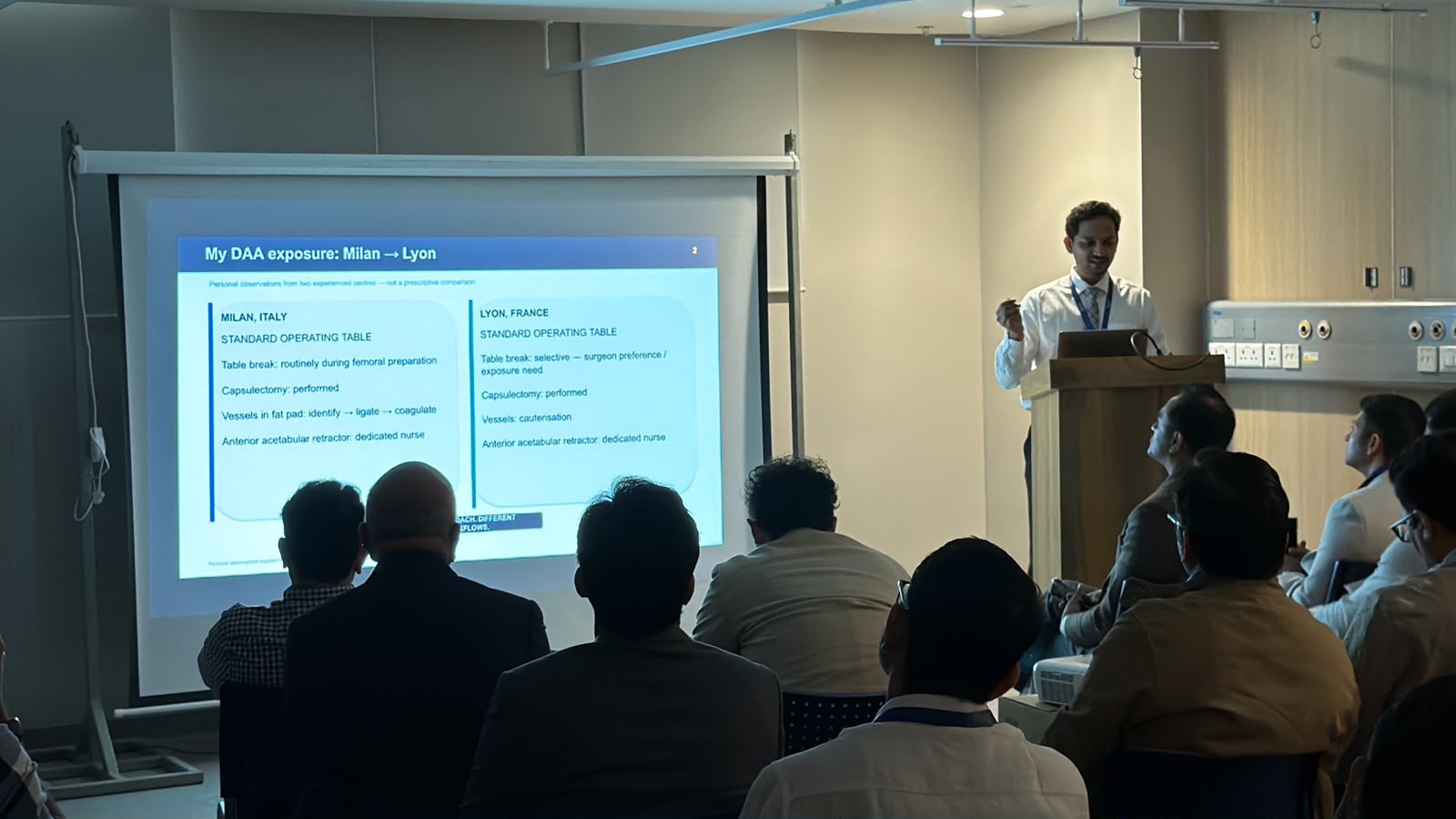
Dr. Arun Reddy Mallu specializes in advanced hip replacement techniques, including uncemented total hip replacement, computer-navigated procedures, and Direct Anterior Hip Replacement for suitable patients.
The choice of hip replacement for avascular necrosis should always be individualized after clinical examination and imaging evaluation.
Why Choose Dr. Arun Reddy Mallu for Hip Replacement for Avascular Necrosis in Hyderabad?
Dr. Arun Reddy Mallu is a Senior Consultant in Orthopedics, Trauma, Arthroscopy, Joint Replacements, and Sports Medicine at Continental Hospitals, Hyderabad.
With over a decade of experience and specialized fellowship training in robotic joint replacements in Mumbai and Italy, he provides comprehensive treatment for hip conditions, including avascular necrosis.
His treatment approach focuses on joint preservation when possible and advanced hip replacement procedures when necessary, with personalized surgical planning and rehabilitation support.
Dr. Arun Reddy Mallu Contact Information
Call:- 9959135963
Whatsapp:- 9959135963
Facebook:- DrArunReddyMallu
Instagram:- drarunreddymallu
Youtube:- https://www.youtube.com/channel/UCt_XTYwyqpzloXtkTLblwxw
LinkedIn:- drarunmallu
Conclusion
Avascular necrosis of the hip requires timely diagnosis and appropriate treatment. Early-stage disease may be managed with joint-preserving procedures, while advanced cases involving femoral head collapse may require total hip replacement.
Choosing an experienced orthopedic specialist is essential for selecting the right treatment. If you are experiencing persistent hip pain or have been diagnosed with AVN, consult Dr. Arun Reddy Mallu in Hyderabad to understand whether hip replacement for avascular necrosis is suitable for your condition.
FAQs
Que:- Can avascular necrosis of the hip be treated without surgery?
Ans:- Early-stage AVN may be managed with activity modification, protected weight-bearing, and medications. However, these treatments may not prevent progression in every patient.
Que:- When is hip replacement necessary for AVN?
Ans:- Hip replacement is generally recommended when the femoral head has collapsed or advanced joint damage causes significant pain and mobility problems.
Que:- How long does a hip replacement last?
Ans:- Many modern hip replacements last 15–20 years or longer, depending on implant type, patient factors, and activity levels.
Que:- Can I walk normally after hip replacement for AVN?
Ans:- Many patients experience significant improvements in walking and daily activities after surgery, supported by appropriate rehabilitation.
Related Tags:-
- Best Orthopedic Surgeon in Hyderabad
- robotic knee replacement
- sports injury specialist
- ACL Reconstruction surgeon
- shoulder arthroscopy
- Joint Replacement Surgeon
- Signs of Joint Damage
- Muscle Injury Causes
- Sprained Your Ankle
- Hip Replacement Recovery
- Managing Knee Osteoarthritis
- Tips for Recovery after Knee Surgery
- Hip Arthritis
- Sports Injury Specialist in Gachibowli
- Your Hip Labral Tear Recovery
- Sprained Ankle Recovery
- Best Orthopedic Surgeon in Kokapet
- Best Orthopedic Doctor in Nanakramguda
- Orthopedic Surgeon Near Hitech City
- Heal a Torn Meniscus Naturally
- Parents Are Losing Balance While Walking
- Arthroscopic Surgery and Open Surgery
- Ideal Timing for Hip Replacement Surgery
- Shoulder Arthroscopy Surgery
- knee pain specialist in Gachibowli
- knee pain specialist in Madhapur
- knee pain specialist in Kondapur
- Knee Pain Specialist in Manikonda
- joint replacement surgeon Kokapet
- joint replacement surgeon in Hitech City
- joint replacement surgeon in Khajaguda
- Joint replacement surgeon in Narsingi
- Bone Specialist Doctor in Miyapur
- fracture treatment doctor in Gachibowli
- bone specialist doctor in Madhapur
- fracture treatment doctor in Kondapur
- sports injury doctor in Manikonda
- sports injury doctor Kokapet
- Sports Injury Doctor in Nanakramguda
- sports injury doctor in Hitech City
- Sports Injury Doctor in Khajaguda
- orthopaedic clinic near Narsingi
- best orthopaedic doctor in Manikonda
- Orthopaedic Doctor in Miyapur
- orthopaedic hospital in Kondapur
- Robotic Knee Replacement
- Robotic Knee Replacement in Hyderabad
- Total Knee Replacement
- Best Orthopaedic Doctor in Gachibowli
- Orthopedic Doctor in Gachibowli
- Knee Pain Specialist Gachibowli
- Best Orthopaedic Doctor in Madhapur
- Orthopedic Doctor in Madhapur
- Orthopaedic Hospital in Madhapur
- ACL Surgery
- Knee Replacement Surgeon
- ACL Meniscus Surgery
- Hip Replacement for Avascular Necrosis