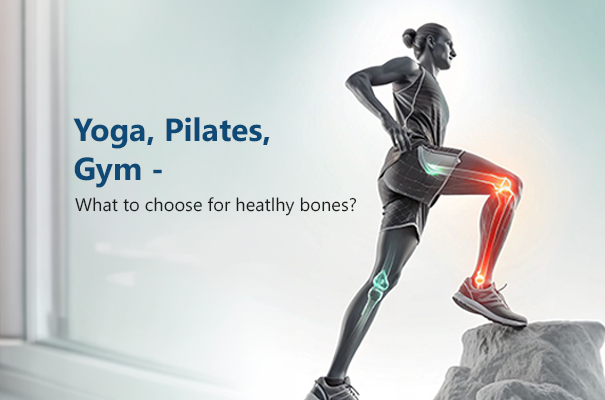
Orthopaedic Hospital in Madhapur – Strong bones are important at every stage of life. As we age, maintaining bone density, muscle strength, balance, and flexibility becomes increasingly important. Many people wonder whether Yoga, Pilates, or Gym workouts are better for maintaining healthy bones. The answer depends on your age, current fitness level, bone health, and any existing medical conditions.
A balanced exercise program that includes weight-bearing activity, resistance training, flexibility, and balance exercises can be beneficial. If you have osteoporosis, previous fractures, or persistent bone or joint pain, consulting an orthopaedic hospital in Madhapur before starting a new exercise program is advisable.
Why Exercise Is Important for Healthy Bones?
Bones are living tissues that respond to physical activity. Regular exercise can help strengthen muscles, improve balance, support mobility, and reduce the risk of falls.
As people get older, maintaining muscle strength becomes particularly important because stronger muscles can provide better support during everyday activities.
An orthopaedic hospital in Madhapur can help patients with existing bone or joint conditions understand which forms of exercise are appropriate for their individual situation.
Yoga for Bone Health
Yoga combines stretching, controlled movements, balance, and body awareness. Certain yoga poses involve supporting your body weight and may help improve balance, flexibility, and muscular strength.
For older adults, improved balance can be especially valuable because falls can result in serious fractures.
However, not every yoga pose is suitable for everyone. People with osteoporosis or a history of spinal fractures may need to avoid certain deep forward bends or movements that place excessive stress on the spine.
If you already have a bone condition, an orthopaedic hospital in Madhapur can help you understand whether modifications or professional supervision are needed.
Pilates for Stronger Muscles and Better Stability
Pilates focuses on controlled movements, core strength, posture, flexibility, and body control. Strengthening the muscles around the abdomen, hips, back, and legs can support better movement and stability.
Pilates may be particularly useful for people who want a low-impact form of exercise that emphasizes controlled technique.
However, Pilates alone may not provide enough weight-bearing or resistance exercise for everyone who wants to focus specifically on bone density. It can work well as part of a broader exercise program.
Gym Workouts and Resistance Training
Gym-based resistance exercises can be highly useful for maintaining muscle strength. Weight training can place controlled stress on bones and muscles, helping support overall musculoskeletal health.
Exercises may include:
- Weight machines
- Resistance bands
- Free weights
- Bodyweight exercises
- Functional strength exercises
The intensity should be appropriate for your age, fitness level, and health condition. Beginners should focus on correct technique rather than lifting heavy weights immediately.
People with osteoporosis or previous fractures should seek professional guidance before starting high-intensity resistance training.
Yoga vs Pilates vs Gym: Which Is Better?
There is no single exercise that is best for everyone.
|
Exercise |
Main Benefits |
| Yoga | Balance, flexibility, mobility, body awareness |
| Pilates | Core strength, posture, stability, controlled movement |
| Gym/Resistance Training | Muscle strength, resistance, weight-bearing activity |
| Combination | Can provide a broader range of fitness benefits |
For healthy bones, combining different forms of exercise may be more beneficial than relying on only one activity.
For example, a person might combine resistance training several times a week with yoga or Pilates for flexibility, balance, and mobility.
What If You Already Have Osteoporosis?
If you have osteoporosis, exercise should be approached carefully. Physical activity can still be important, but certain movements may increase the risk of injury depending on the severity of bone loss.
Avoid starting a demanding workout routine without understanding your individual limitations. An orthopaedic hospital in Madhapur can help evaluate your bone and joint health and guide you toward appropriate physical activity.
Exercise After 50
After the age of 50, exercise should focus not only on bone strength but also on maintaining balance, muscle mass, joint mobility, and independence.
A practical routine may include:
- Resistance exercises for strength
- Walking or other weight-bearing activities
- Balance exercises
- Flexibility and mobility work
- Appropriate yoga or Pilates movements
The right combination depends on individual health and fitness.
When Should You Visit an Orthopaedic Hospital in Madhapur?
You should consider an evaluation at an orthopaedic hospital in Madhapur if you experience unexplained bone or joint pain, recurrent injuries, fractures after minor falls, significant back pain, or concerns about osteoporosis.
An orthopaedic specialist can assess your condition and help determine whether you need further evaluation before beginning an exercise program.
Dr. Arun Reddy Mallu Contact Information
Call:- 9959135963
Whatsapp:- 9959135963
Facebook:- DrArunReddyMallu
Instagram:- drarunreddymallu
Youtube:- https://www.youtube.com/channel/UCt_XTYwyqpzloXtkTLblwxw
LinkedIn:- drarunmallu
Conclusion
Yoga, Pilates, and gym workouts can all play a role in maintaining a healthy and active body. However, they offer different benefits. Yoga can support balance and flexibility, Pilates can improve core strength and stability, while resistance training can help build muscle and provide beneficial loading for bones.
For many people, a combination of these activities may be the most practical approach. If you have osteoporosis, a previous fracture, or an existing bone or joint problem, consult an orthopaedic hospital in Madhapur before beginning a new exercise routine. The right exercise plan can help support stronger bones, better mobility, and an active lifestyle.
Related Tags:-
- Best Orthopedic Surgeon in Hyderabad
- robotic knee replacement
- sports injury specialist
- ACL Reconstruction surgeon
- shoulder arthroscopy
- Joint Replacement Surgeon
- Signs of Joint Damage
- Muscle Injury Causes
- Sprained Your Ankle
- Hip Replacement Recovery
- Managing Knee Osteoarthritis
- Tips for Recovery after Knee Surgery
- Hip Arthritis
- Sports Injury Specialist in Gachibowli
- Your Hip Labral Tear Recovery
- Sprained Ankle Recovery
- Best Orthopedic Surgeon in Kokapet
- Best Orthopedic Doctor in Nanakramguda
- Orthopedic Surgeon Near Hitech City
- Heal a Torn Meniscus Naturally
- Parents Are Losing Balance While Walking
- Arthroscopic Surgery and Open Surgery
- Ideal Timing for Hip Replacement Surgery
- Shoulder Arthroscopy Surgery
- knee pain specialist in Gachibowli
- knee pain specialist in Madhapur
- knee pain specialist in Kondapur
- Knee Pain Specialist in Manikonda
- joint replacement surgeon Kokapet
- joint replacement surgeon in Hitech City
- joint replacement surgeon in Khajaguda
- Joint replacement surgeon in Narsingi
- Bone Specialist Doctor in Miyapur
- fracture treatment doctor in Gachibowli
- bone specialist doctor in Madhapur
- fracture treatment doctor in Kondapur
- sports injury doctor in Manikonda
- sports injury doctor Kokapet
- Sports Injury Doctor in Nanakramguda
- sports injury doctor in Hitech City
- Sports Injury Doctor in Khajaguda
- orthopaedic clinic near Narsingi
- best orthopaedic doctor in Manikonda
- Orthopaedic Doctor in Miyapur
- orthopaedic hospital in Kondapur
- Robotic Knee Replacement
- Robotic Knee Replacement in Hyderabad
- Total Knee Replacement
- Best Orthopaedic Doctor in Gachibowli
- Orthopedic Doctor in Gachibowli
- Knee Pain Specialist Gachibowli
- Best Orthopaedic Doctor in Madhapur
- Orthopedic Doctor in Madhapur
- Orthopaedic Hospital in Madhapur