
How Long is Hip Replacement Recovery?
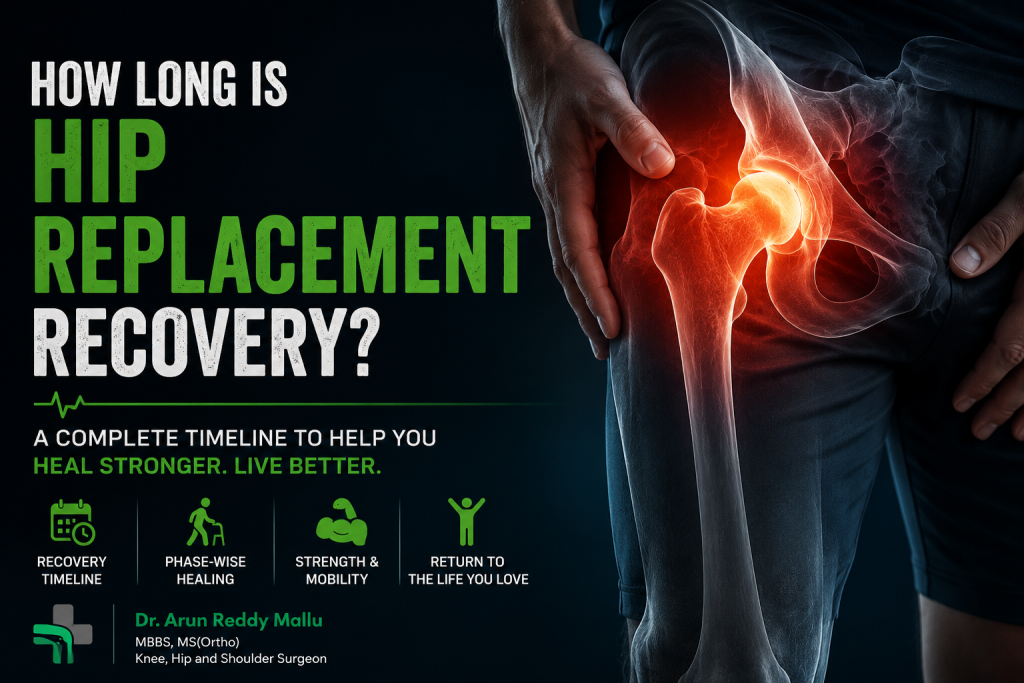
Hip Replacement Recovery – Hip replacement surgery has helped countless people regain mobility, reduce chronic pain, and return to an active lifestyle. Patients suffering from severe hip arthritis, joint damage, fractures, or mobility problems often experience significant improvement after surgery. However, one of the most common questions patients ask is about Hip Replacement Recovery and how long it takes to return to normal activities. Recovery after hip replacement varies from person to person depending on age, overall health, physical condition, and the type of surgery performed. According to Dr. Arun Reddy Mallu, proper rehabilitation, physiotherapy, and advanced surgical techniques play a major role in improving recovery outcomes after hip replacement surgery. What Is Hip Replacement Surgery? Hip replacement surgery is a procedure where the damaged parts of the hip joint are replaced with artificial implants. The surgery is commonly recommended for patients suffering from: Severe osteoarthritis Hip joint damage Chronic hip pain Hip fractures Avascular necrosis Reduced mobility due to hip degeneration The goal of surgery is to relieve pain, improve movement, and help patients regain independence in daily activities. Dr. Arun Reddy Mallu specializes in robotic and navigated hip replacement surgeries, including advanced techniques such as Direct Anterior Approach for Total Hip Replacement. Understanding Hip Replacement Recovery Timeline The timeline for Hip Replacement Recovery differs for every patient, but most people gradually recover over several weeks to months. First Few Days After Surgery Recovery begins immediately after surgery. Most patients are encouraged to start moving within a day after the procedure under medical supervision. During this stage: Walking assistance devices may be used Physiotherapy begins early Pain management is provided Gentle movement exercises are introduced Early movement helps improve circulation, reduce stiffness, and support faster recovery. First Two Weeks of Hip Replacement Recovery The first two weeks are extremely important for healing. Patients gradually improve their ability to walk, sit, and perform basic activities. During this period: Swelling and mild discomfort are common Walking improves slowly Surgical wounds begin healing Physiotherapy continues regularly Many patients can walk short distances with support during this stage. Proper rehabilitation and following orthopedic advice carefully can improve recovery outcomes significantly. Recovery Between 4 to 6 Weeks Most patients notice considerable improvement during this phase of Hip Replacement Recovery. By this time: Walking becomes easier Pain reduces significantly Mobility improves Daily activities become more manageable Some patients may slowly return to desk jobs or light activities depending on their recovery progress. However, strenuous activities and heavy lifting should still be avoided unless advised by the orthopedic surgeon. Recovery After 3 Months Around three months after surgery, many patients experience major improvements in movement and quality of life. At this stage: Hip strength improves Walking becomes smoother Stiffness reduces Most routine activities can be performed comfortably Patients who follow physiotherapy consistently often recover faster and regain confidence in movement earlier. Full Hip Replacement Recovery Complete Hip Replacement Recovery may take several months depending on the patient’s condition and the complexity of surgery. Some individuals recover faster, while others may require longer rehabilitation, especially older adults or patients with severe joint damage. Long-term recovery focuses on: Strengthening muscles around the hip Improving flexibility Restoring balance and coordination Preventing future joint stress Advanced surgical techniques and robotic-assisted procedures can help improve implant positioning and support better recovery outcomes. Factors That Affect Hip Replacement Recovery Several factors influence how quickly a patient recovers after hip replacement surgery. Age and Overall Health Younger and healthier patients often recover faster because their muscles and bones heal more efficiently. Physical Fitness Before Surgery Patients who maintain better strength and flexibility before surgery may experience smoother rehabilitation. Type of Surgery Minimally invasive and robotic-assisted hip replacement surgeries may support quicker recovery and improved precision. Physiotherapy and Rehabilitation Regular physiotherapy is one of the most important parts of successful Hip Replacement Recovery. Following Medical Advice Patients who follow post-surgical instructions carefully usually achieve better long-term outcomes. Importance of Physiotherapy After Hip Replacement Physiotherapy plays a major role in restoring movement after surgery. Rehabilitation programs focus on: Improving hip flexibility Strengthening muscles Improving walking ability Preventing stiffness Enhancing balance and stability Skipping physiotherapy can delay recovery and affect long-term mobility. When Can Patients Return to Normal Activities? Most patients can gradually return to normal activities within several weeks after surgery. Typical recovery milestones may include: Walking with support within days Driving after a few weeks if approved by the doctor Returning to office work within 4 to 6 weeks Resuming moderate activities after a few months High-impact sports and excessive physical stress should be avoided unless specifically cleared by the orthopedic surgeon. Warning Signs During Hip Replacement Recovery Patients should consult their orthopedic specialist immediately if they experience: Severe swelling Persistent pain Fever or redness around the incision Difficulty walking suddenly Signs of infection Hip instability Early medical attention can help prevent complications. Why Choosing the Right Orthopedic Surgeon Matters Successful Hip Replacement Recovery depends greatly on surgical expertise, advanced techniques, and proper rehabilitation planning. Dr. Arun Reddy Mallu is widely recognized for expertise in robotic joint replacement, arthroscopy, sports injury management, complex hip and knee surgeries, and trauma care. His patient-focused approach and precision-based orthopedic treatment have helped many patients regain mobility and improve their quality of life. Known for advanced orthopedic care and modern surgical techniques, Dr. Arun Reddy Mallu is considered one of the best orthopedic surgeons in Hyderabad for hip replacement surgery, robotic joint replacement, sports injuries, arthroscopy, and revision joint replacement procedures. Dr. Arun Reddy Mallu Contact Information Call:- 9959135963 Whatsapp:- 9959135963 Facebook:- DrArunReddyMallu Instagram:- drarunreddymallu Youtube:- https://www.youtube.com/channel/UCt_XTYwyqpzloXtkTLblwxw LinkedIn:- drarunmallu Conclusion Understanding the timeline of Hip Replacement Recovery helps patients prepare mentally and physically for the healing process. Recovery is gradual, but with proper rehabilitation, physiotherapy, and expert orthopedic care, most patients can return to comfortable and active lifestyles. If you are experiencing chronic hip pain, difficulty walking, or severe joint damage, consulting an experienced orthopedic specialist like Dr. Arun Reddy Mallu can help you receive advanced treatment and personalized recovery guidance for long-term
How to Know if You Sprained Your Ankle?
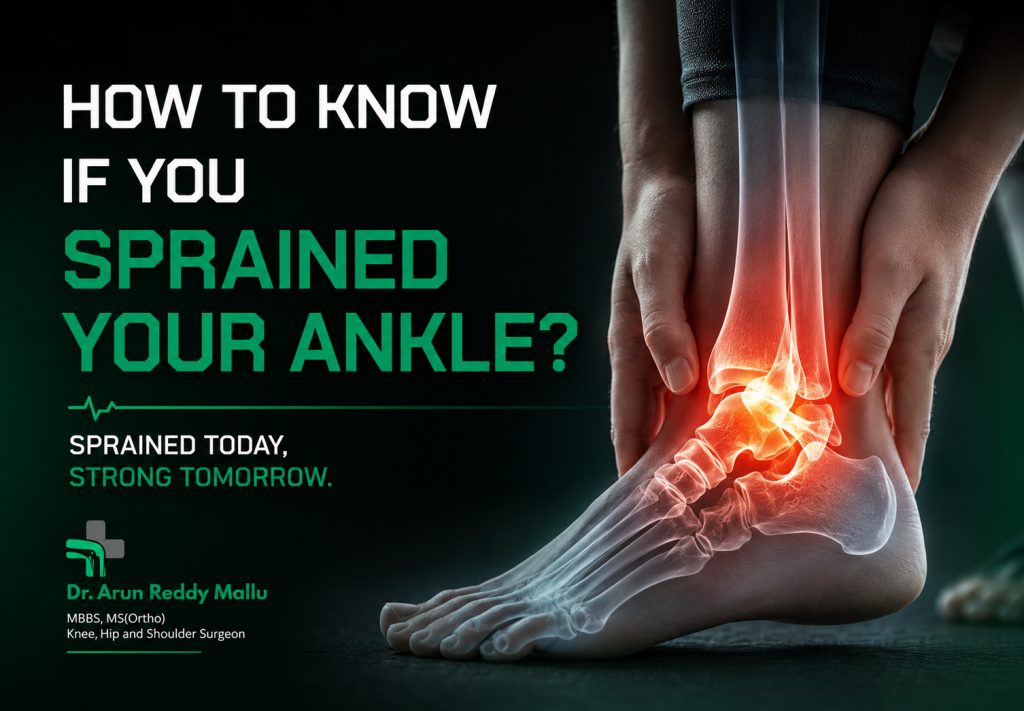
Sprained Your Ankle – An ankle sprain is one of the most common orthopedic injuries affecting people of all ages. Whether it happens during sports, exercise, walking on uneven surfaces, or even during daily activities, a sprained ankle can cause pain, swelling, and difficulty walking. Many people ignore mild ankle injuries, assuming the pain will go away on its own. However, untreated ankle sprains can sometimes lead to long-term instability and repeated injuries. Understanding the symptoms of a Sprained your Ankle condition can help you seek timely treatment and prevent complications. According to Dr. Arun Reddy Mallu, early diagnosis and proper orthopedic care play a major role in faster recovery and long-term ankle stability. What Happens When You Sprain Your Ankle? A sprained ankle occurs when the ligaments supporting the ankle joint are stretched or torn. Ligaments are strong bands of tissue that stabilize the joint and prevent excessive movement. Most ankle sprains happen when the foot twists inward suddenly, causing damage to the outer ankle ligaments. Sports activities, sudden falls, awkward landings, or walking on uneven ground are some of the most common causes. The severity of the injury may vary from mild ligament stretching to complete tears. Common Causes of Sprained Your Ankle Injuries There are several situations where people may accidentally experience a Sprained your Ankle injury, including: Sports injuries during running or jumping Sudden twisting movements Slipping or falling Walking on uneven surfaces Wearing improper footwear Weak ankle muscles or previous ankle injuries Athletes and physically active individuals are particularly at higher risk of ankle sprains. Immediate Pain Around the Ankle One of the first signs that you may have Sprained your Ankle is sudden pain around the ankle joint. The pain may begin immediately after twisting the ankle and can worsen while standing or walking. Some people experience sharp pain at the moment of injury, while others may notice gradual discomfort and stiffness afterward. Pain intensity usually depends on the severity of the ligament damage. Swelling and Inflammation Swelling is one of the most common symptoms of an ankle sprain. The injured ligaments become inflamed, leading to puffiness around the ankle area. You may notice: Swelling around the ankle Warmth near the injured area Tenderness while touching the ankle Tightness in the joint Swelling may appear immediately or develop gradually over several hours after the injury. Bruising Around the Ankle Bruising is another common sign that you may have Sprained your Ankle. Damaged blood vessels around the ligament can cause blue, purple, or black discoloration around the ankle and foot. Bruising often appears within 24 to 48 hours after the injury and may spread to nearby areas. Difficulty Walking People with ankle sprains often experience difficulty walking or putting weight on the affected foot. Severe ligament injuries may cause instability, making it painful to stand or move normally. Some individuals feel like the ankle is weak or unable to support body weight properly. If walking becomes extremely difficult or painful, medical evaluation is strongly recommended. Reduced Range of Motion An ankle sprain can make it difficult to move the foot normally. You may notice stiffness or pain while rotating, bending, or flexing the ankle. Reduced mobility may indicate inflammation, ligament injury, or joint instability. Ignoring these symptoms can delay healing and increase the risk of repeated ankle injuries. Tenderness Around the Ligaments Tenderness around the ankle ligaments is another important symptom. Touching the injured area may cause discomfort or pain, especially along the outer side of the ankle. This tenderness occurs because the ligaments become inflamed after injury. Feeling of Instability Some patients feel like the ankle may “give way” while walking. This feeling of instability is commonly associated with ligament damage and weakened ankle support. Repeated untreated sprains may eventually lead to chronic ankle instability, especially in athletes and active individuals. Different Grades of Ankle Sprains Doctors usually classify ankle sprains into different grades depending on the severity of ligament damage. Grade 1 Sprain Mild stretching of ligaments Mild pain and swelling Minimal difficulty walking Grade 2 Sprain Partial ligament tear Moderate swelling and bruising Pain while walking Grade 3 Sprain Complete ligament tear Severe swelling and instability Inability to bear weight properly Proper orthopedic evaluation helps determine the severity of the injury and the right treatment plan. How Is a Sprained Ankle Diagnosed? Orthopedic specialists evaluate ankle sprains through physical examination and imaging studies if necessary. Diagnosis may include: Checking swelling and tenderness Evaluating ankle stability Assessing walking ability X-rays to rule out fractures MRI scans for severe ligament injuries Early diagnosis helps prevent complications and supports better recovery outcomes. Treatment for Sprained Your Ankle Treatment depends on the severity of the injury. Mild sprains may improve with conservative care, while severe ligament tears may require advanced orthopedic management. Common treatment options include: Rest and activity modification Ice application Compression and elevation Physiotherapy and rehabilitation Ankle strengthening exercises Sports injury rehabilitation Arthroscopy or ligament reconstruction in severe cases Modern orthopedic care focuses on restoring mobility, reducing pain, and preventing future injuries. Dr. Arun Reddy Mallu specializes in sports injury management, arthroscopy, ligament reconstruction, robotic orthopedic procedures, and advanced joint care for patients with ankle and sports-related injuries. When Should You See an Orthopedic Specialist? You should consult an orthopedic doctor if you experience: Severe ankle pain Persistent swelling Difficulty walking Bruising around the ankle Repeated ankle injuries Feeling of instability Limited ankle movement Ignoring ankle injuries may increase the risk of chronic pain and long-term instability. Dr. Arun Reddy Mallu Contact Information Call:- 9959135963 Whatsapp:- 9959135963 Facebook:- DrArunReddyMallu Instagram:- drarunreddymallu Youtube:- https://www.youtube.com/channel/UCt_XTYwyqpzloXtkTLblwxw LinkedIn:- drarunmallu Conclusion Recognizing the symptoms of a Sprained your Ankle injury early can help prevent complications and speed up recovery. Pain, swelling, bruising, instability, and difficulty walking should never be ignored. Dr. Arun Reddy Mallu is widely recognized for expertise in sports injury treatment, arthroscopy, robotic joint replacement, trauma care, and advanced orthopedic procedures. With patient-focused care and advanced orthopedic techniques, he has helped many patients recover from ligament injuries and regain active lifestyles. Known
Muscle Injury Causes – Everyday Mistakes Explained
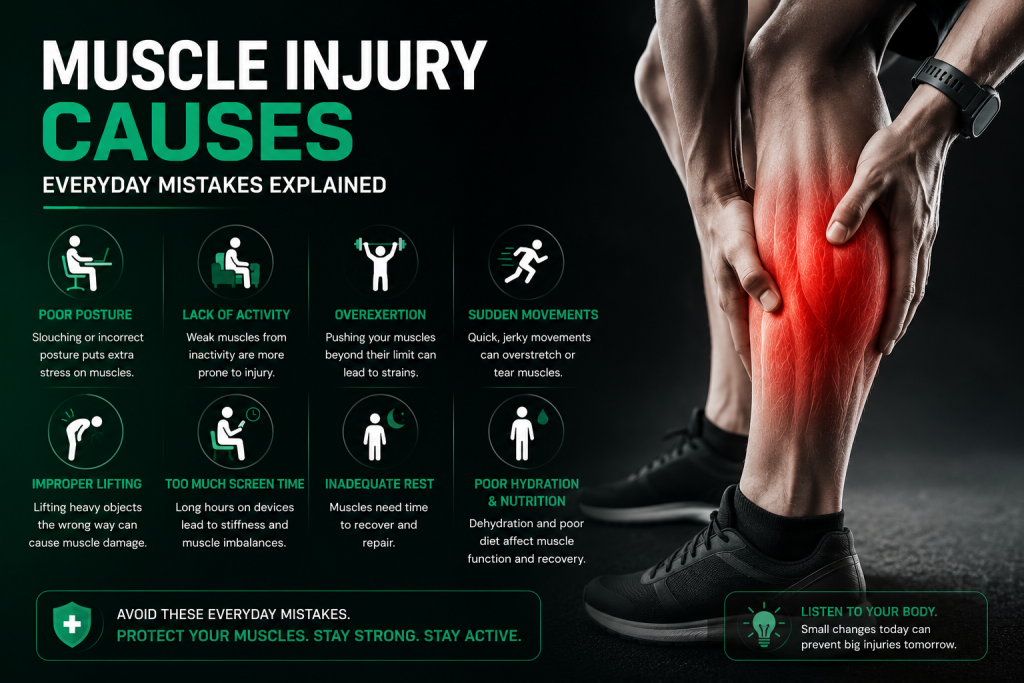
Muscle Injury Causes – Muscle injuries are one of the most common orthopedic problems affecting people of all ages. Whether you are an athlete, office worker, gym enthusiast, or someone performing daily household activities, muscle injuries can happen unexpectedly. Many people assume muscle pain is temporary and ignore the early signs until the condition worsens. Understanding the common Muscle Injury Causes can help prevent serious complications, improve recovery, and protect long-term mobility. According to Dr. Arun Reddy Mallu, many muscle injuries occur because of simple everyday mistakes that people often overlook. What Is a Muscle Injury? A muscle injury occurs when muscle fibers become overstretched, strained, or torn. These injuries can range from mild discomfort to severe tears that significantly affect movement and daily activities. Muscle injuries commonly affect the: Back Shoulders Neck Hamstrings Calf muscles Quadriceps Arms In many cases, muscle injuries are preventable when proper care, posture, and physical techniques are followed. Poor Warm-Up Before Exercise One of the leading Muscle Injury Causes is skipping warm-up exercises before physical activity. Many people start intense workouts, running, or sports activities without preparing their muscles properly. Cold muscles are less flexible and more prone to strain or tearing. Warm-up exercises help improve blood circulation, increase flexibility, and prepare muscles for movement. Simple stretching and mobility exercises before workouts can significantly reduce injury risk. Incorrect Exercise Techniques Using improper form while exercising is another major reason behind muscle injuries. Incorrect lifting posture, poor gym techniques, or excessive training can place unnecessary stress on muscles and joints. Many sports injuries occur because individuals attempt advanced workouts without proper guidance or supervision. Dr. Arun Reddy Mallu specializes in sports injury management, arthroscopy, ligament reconstruction, and orthopedic care for patients dealing with muscle and joint injuries caused by physical activity. Overtraining Without Rest Exercising continuously without allowing the body to recover is one of the common Muscle Injury Causes seen in athletes and fitness enthusiasts. Muscles need adequate recovery time after intense activity. Without proper rest: Muscle fatigue increases Flexibility reduces Risk of tears and strains rises Recovery becomes slower Overtraining can eventually lead to chronic pain, inflammation, and long-term orthopedic complications. Poor Posture During Daily Activities Many muscle injuries are not caused by sports but by poor posture during daily routines. Sitting for long hours with improper posture, using laptops incorrectly, bending repeatedly, or lifting heavy objects the wrong way can place constant stress on muscles. Common posture-related problems include: Neck pain Shoulder stiffness Lower back muscle strain Muscle tightness Correct ergonomic posture and regular movement breaks are essential for preventing muscle stress and injuries. Sudden Increase in Physical Activity A sudden increase in workout intensity or physical activity is another important factor contributing to Muscle Injury Causes. People often return to exercise after long breaks and immediately start heavy workouts, running, or lifting weights. This sudden strain can overload muscles that are not conditioned properly. Gradually increasing workout intensity helps muscles adapt safely and reduces injury risk. Dehydration and Poor Nutrition Muscles require proper hydration and nutrition to function effectively. Dehydration can cause muscle cramps, weakness, and reduced flexibility, increasing the likelihood of injuries. Poor nutrition may also weaken muscles and slow recovery. A balanced diet rich in protein, vitamins, minerals, and hydration supports muscle strength and healing. Ignoring hydration during sports or workouts is a common mistake many people make. Ignoring Early Muscle Pain One of the biggest mistakes people make is ignoring mild pain or discomfort. Persistent soreness, tightness, or weakness may indicate an early muscle injury. Continuing physical activity despite pain can worsen the condition and increase the risk of severe tears or ligament injuries. Early orthopedic evaluation can help identify the underlying problem before it becomes more serious. Lifting Heavy Objects Incorrectly Improper lifting techniques are among the most overlooked Muscle Injury Causes. Lifting heavy weights using the back instead of the legs places excessive stress on muscles and joints. This can result in: Muscle strains Back injuries Shoulder injuries Joint pain Using proper lifting posture and avoiding sudden twisting movements can reduce injury risk significantly. Lack of Flexibility and Mobility Tight muscles are more vulnerable to injury. Lack of stretching, mobility exercises, or flexibility training can increase stress on muscles during movement. Regular stretching helps maintain muscle flexibility, improve circulation, and support healthy movement patterns. People with sedentary lifestyles are particularly at risk for muscle stiffness and reduced flexibility. Sports Injuries and Muscle Damage Sports activities often involve sudden movements, jumping, twisting, or rapid direction changes that can strain muscles and ligaments. Common sports-related muscle injuries include: Hamstring strains Calf muscle tears Shoulder muscle injuries ACL-related muscle stress Groin strains Advanced orthopedic care, physiotherapy, and rehabilitation are essential for proper recovery and preventing repeated injuries. Why Early Treatment Is Important Ignoring muscle injuries can lead to chronic pain, reduced mobility, muscle weakness, and long-term orthopedic complications. Early diagnosis and treatment can help: Reduce pain and inflammation Improve healing Prevent severe tears Restore movement and strength Avoid future injuries Depending on the condition, treatment may include physiotherapy, rehabilitation, sports medicine care, arthroscopy, or advanced orthopedic procedures. Modern orthopedic techniques help patients recover faster and safely return to their normal activities. When Should You See an Orthopedic Specialist? You should consult an orthopedic doctor if you experience: Persistent muscle pain Swelling or inflammation Difficulty moving a limb Muscle weakness Sudden sharp pain during activity Sports-related injuries Pain affecting daily activities Early medical care can prevent complications and speed up recovery. Dr. Arun Reddy Mallu Contact Information Call:- 9959135963 Whatsapp:- 9959135963 Facebook:- DrArunReddyMallu Instagram:- drarunreddymallu Youtube:- https://www.youtube.com/channel/UCt_XTYwyqpzloXtkTLblwxw LinkedIn:- drarunmallu Conclusion Understanding the common Muscle Injury Causes can help you avoid preventable orthopedic problems and maintain long-term muscle health. Simple lifestyle changes like proper warm-ups, good posture, hydration, stretching, and safe exercise techniques can make a major difference in preventing injuries. Dr. Arun Reddy Mallu is widely recognized for expertise in sports injury treatment, arthroscopy, robotic joint replacement, trauma care, and advanced orthopedic procedures. With patient-focused treatment and modern orthopedic techniques, he has helped many patients
Early Warning Signs of Joint Damage You Should Never Ignore
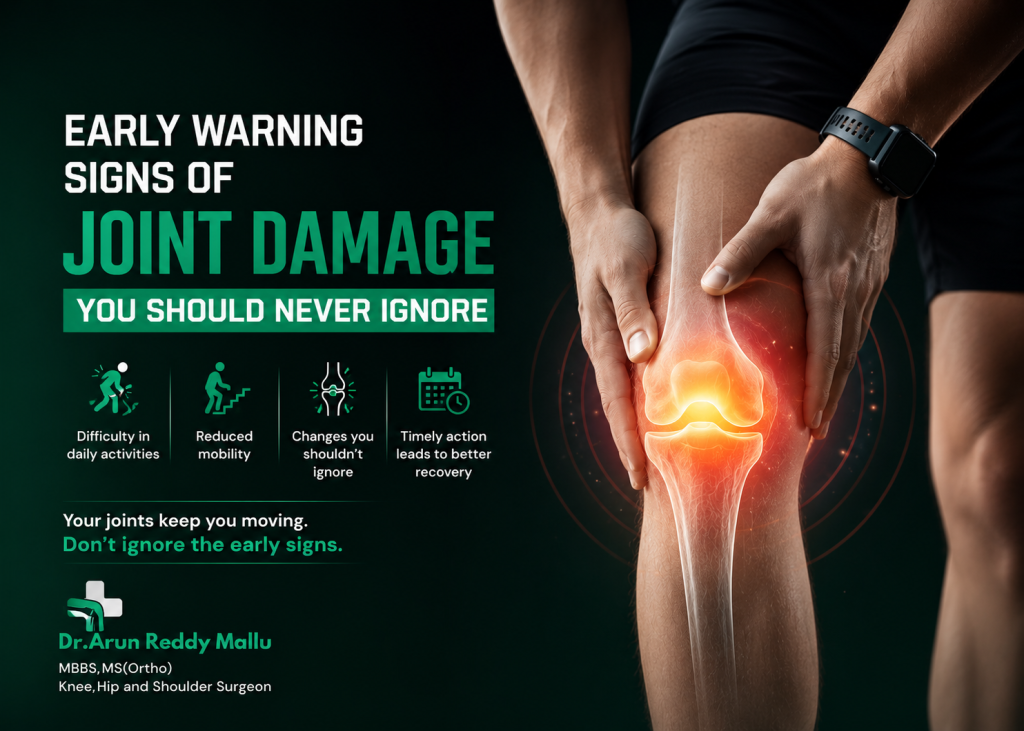
Signs of Joint Damage – Joint pain and stiffness are often ignored as a normal part of aging or daily stress. However, persistent discomfort in your knees, hips, shoulders, or other joints may indicate a more serious orthopedic problem. Recognizing the early Warning Signs of Joint Damage can help prevent severe complications and improve long-term mobility. Joint damage can develop gradually due to arthritis, sports injuries, trauma, ligament injuries, cartilage wear, or degenerative orthopedic conditions. Seeking treatment at the right time can reduce pain, protect joint function, and help patients maintain an active lifestyle. According to Dr. Arun Reddy Mallu, early diagnosis and proper orthopedic care are extremely important in preventing advanced joint damage and preserving joint health. What Causes Joint Damage? Joint damage occurs when the cartilage, ligaments, tendons, or bones within a joint begin to deteriorate or become injured. This can happen because of: Osteoarthritis Sports injuries Ligament tears Cartilage injuries Fractures or trauma Repetitive stress on joints Obesity and excess body weight Age-related wear and tear Untreated orthopedic conditions When these issues are ignored, they may eventually lead to chronic pain, stiffness, reduced mobility, and even the need for joint replacement surgery. Persistent Joint Pain One of the most common Warning Signs of Joint Damage is persistent joint pain. Occasional discomfort after physical activity may be normal, but ongoing pain lasting for weeks or months should never be ignored. Pain in the knees, hips, shoulders, or ankles during walking, climbing stairs, exercise, or even rest can indicate cartilage damage, arthritis, or ligament injury. Patients often delay treatment until the pain becomes severe, but early orthopedic evaluation can help prevent further joint deterioration. Joint Stiffness in the Morning Morning stiffness is another major sign of developing joint problems. If your joints feel tight or difficult to move after waking up or after sitting for long periods, it may indicate inflammation or early arthritis. Stiffness that improves slowly throughout the day can suggest progressive joint degeneration. Early treatment and physiotherapy can help improve flexibility and mobility. Swelling Around the Joint Swelling is one of the most noticeable Warning Signs of Joint Damage. Inflammation around the joint may occur due to injury, cartilage wear, ligament tears, or arthritis. Common symptoms include: Puffiness around the joint Warmth or redness Tenderness while touching the area Difficulty moving the joint Persistent swelling should always be evaluated by an orthopedic specialist because untreated inflammation can worsen joint damage over time. Clicking or Grinding Sounds Hearing clicking, grinding, or popping sounds while moving your joints may indicate cartilage wear or instability within the joint. Although occasional joint sounds may not always be serious, frequent grinding associated with pain or swelling could signal early orthopedic damage. Conditions such as meniscus injuries, cartilage degeneration, or ligament instability can produce these symptoms. Reduced Range of Motion Difficulty bending or straightening a joint is another important warning sign. Reduced flexibility in the knee, hip, or shoulder may suggest joint inflammation, cartilage damage, or ligament injuries. Patients may notice problems with: Squatting Climbing stairs Lifting objects Walking long distances Raising the arms Ignoring these symptoms may eventually affect daily activities and overall quality of life. Joint Instability or Weakness If a joint feels unstable, weak, or gives way while walking, it could indicate ligament injuries or structural joint damage. This is commonly seen in sports injuries involving the ACL, PCL, meniscus, or shoulder instability. Early diagnosis is important to prevent further damage and restore proper joint function. Dr. Arun Reddy Mallu specializes in sports injury management, arthroscopy, ligament reconstruction, and complex orthopedic procedures for patients suffering from joint instability and mobility issues. Pain During Physical Activity Pain that increases during exercise or physical activity should never be ignored. Many people assume discomfort during movement is temporary, but repeated pain may indicate early cartilage wear or stress on the joints. Athletes and physically active individuals are especially at risk for sports-related orthopedic injuries. Early treatment can help avoid long-term joint complications. Difficulty Performing Daily Activities One of the serious Warning Signs of Joint Damage is difficulty performing routine activities such as walking, standing, sitting, or carrying objects. Patients may start avoiding activities they once enjoyed because of pain or stiffness. Over time, reduced activity can affect muscle strength and overall mobility. Consulting an orthopedic specialist early can help patients receive the right treatment before the condition worsens. Why Early Orthopedic Treatment Matters Early diagnosis and treatment play a crucial role in preventing advanced joint damage. Modern orthopedic care focuses on preserving the natural joint whenever possible. Depending on the condition, treatment options may include: Physiotherapy Lifestyle modifications Sports injury management Arthroscopic surgery Ligament reconstruction Joint preservation procedures Robotic-assisted joint replacement for severe cases Advanced orthopedic techniques help patients recover faster and improve mobility with better precision and long-term outcomes. When Should You See an Orthopedic Specialist? You should consult an orthopedic surgeon if you experience: Persistent joint pain Swelling or inflammation Joint stiffness Difficulty walking Clicking or grinding sounds Reduced flexibility Joint instability Sports-related injuries Pain affecting daily activities Ignoring these symptoms may lead to permanent joint damage and more complicated treatment later. Dr. Arun Reddy Mallu Contact Information Call:- 9959135963 Whatsapp:- 9959135963 Facebook:- DrArunReddyMallu Instagram:- drarunreddymallu Youtube:- https://www.youtube.com/channel/UCt_XTYwyqpzloXtkTLblwxw LinkedIn:- drarunmallu Conclusion Recognizing the early Warning Signs of Joint Damage can help protect your joints, reduce pain, and improve long-term mobility. Early orthopedic care can prevent complications and help patients maintain an active and healthy lifestyle. Dr. Arun Reddy Mallu is widely recognized for his expertise in joint replacement surgery, arthroscopy, sports injury treatment, robotic orthopedic procedures, and complex trauma care. With advanced surgical expertise and patient-focused treatment, he has helped many patients recover mobility and improve their quality of life. Known for advanced orthopedic care and precision-based treatment approaches, Dr. Arun Reddy Mallu is considered one of the best orthopedic surgeons in Hyderabad for knee injuries, hip problems, sports injuries, arthroscopy, and joint replacement surgeries. If you are experiencing any early signs of joint damage, consulting an experienced orthopedic specialist like Dr. Arun Reddy Mallu
When Do You Need a Revision Joint Replacement Surgeon?
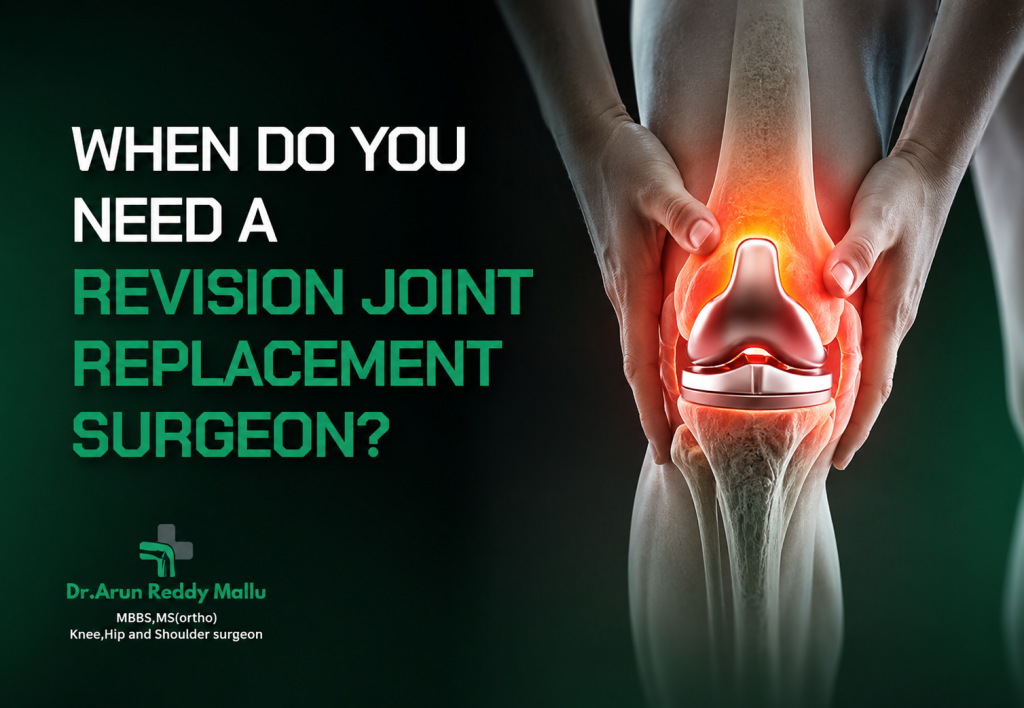
Joint Replacement Surgeon – Joint replacement surgery has transformed the lives of millions of people suffering from severe knee, hip, and shoulder pain. Most joint replacement procedures provide long-lasting relief and improved mobility. However, in some cases, patients may continue to experience pain, instability, stiffness, or implant-related complications after surgery. This is when the expertise of a Revision Joint Replacement Surgeon becomes extremely important. A Revision Joint Replacement Surgeon specializes in correcting or replacing a failed joint replacement. These surgeries are more complex than primary joint replacements and require advanced surgical planning, precision, and experience. What Is Revision Joint Replacement Surgery? Revision joint replacement surgery is a procedure performed to repair, replace, or correct an existing artificial joint that is not functioning properly anymore. Unlike a primary knee or hip replacement, revision surgery involves removing the old implant and placing a new prosthesis designed to restore stability, function, and pain relief. A skilled Revision Joint Replacement Surgeon carefully evaluates the condition of the joint, surrounding bone, ligaments, and muscles before planning the surgery. These procedures are technically demanding and require specialized expertise in complex orthopedic reconstruction. Signs You May Need a Revision Joint Replacement Surgeon Many patients assume that pain after joint replacement is normal. While temporary discomfort during recovery is expected, persistent or worsening symptoms should never be ignored. Here are some common signs that indicate you may need consultation with a Revision Joint Replacement Surgeon. Persistent Joint Pain One of the most common warning signs is ongoing pain after knee, hip, or shoulder replacement surgery. If pain continues months or years after the procedure, it may indicate implant loosening, infection, wear, or alignment problems. Pain during walking, climbing stairs, or even while resting can affect quality of life and should be evaluated by an orthopedic specialist. Difficulty Walking or Reduced Mobility If you notice increasing stiffness or difficulty performing daily activities, your artificial joint may not be functioning properly. Limited movement, instability, or reduced range of motion can suggest implant failure or mechanical issues. A Revision Joint Replacement Surgeon can assess whether revision surgery is necessary to restore proper movement and joint function. Implant Loosening Over time, artificial joints can become loose from the surrounding bone. Implant loosening may happen because of wear and tear, aging, bone loss, or excessive stress on the joint. Patients often experience pain, swelling, or a feeling that the joint is unstable. Early diagnosis is important to prevent further bone damage. Joint Infection Infection is one of the most serious complications after joint replacement surgery. Symptoms may include redness, swelling, warmth, fever, drainage, or severe pain around the operated joint. A highly experienced Revision Joint Replacement Surgeon plays a critical role in treating infected joint replacements through advanced surgical techniques and infection management protocols. Recurrent Joint Instability If the replaced joint repeatedly slips, dislocates, or feels unstable, revision surgery may be required. This is more commonly seen in hip and shoulder replacements. Instability can affect confidence while walking and increase the risk of falls or injuries. Wear and Tear of the Implant Artificial joints are designed to last for many years, but eventually some components may wear out. Patients who had joint replacement at a younger age may require revision surgery later in life due to implant wear. Advanced imaging and orthopedic evaluation help determine whether the implant needs replacement. Why Choosing the Right Revision Joint Replacement Surgeon Matters Revision joint replacement procedures are significantly more complicated than primary surgeries. They require advanced surgical skills, precise planning, and expertise in handling complex orthopedic conditions. Choosing an experienced Revision Joint Replacement Surgeon can improve surgical outcomes, reduce complications, and help patients recover mobility safely. Dr. Arun Reddy Mallu is recognized for expertise in complex orthopedic procedures including revision knee and hip replacements, robotic joint replacements, arthroscopy, and sports injury management. His approach focuses on precision, advanced techniques, and patient-centered orthopedic care. Conditions Commonly Treated by a Revision Joint Replacement Surgeon A Revision Joint Replacement Surgeon may treat several complex orthopedic conditions, including: Failed knee replacement surgery Failed hip replacement surgery Shoulder replacement complications Implant loosening Periprosthetic fractures Joint infections Severe stiffness after replacement surgery Recurrent dislocation or instability Bone loss around implants These cases often require advanced reconstruction techniques and specialized implants. Advanced Techniques Used in Revision Joint Replacement Surgery Modern orthopedic advancements have improved the success rates of revision surgeries. Experienced surgeons use advanced technologies to improve precision and recovery outcomes. Some modern approaches include: Robotic-assisted joint replacement Computer-navigated surgery Minimally invasive surgical techniques Advanced imaging for surgical planning Customized implants for complex reconstruction These technologies help improve implant positioning, reduce complications, and support faster rehabilitation. Recovery After Revision Joint Replacement Surgery Recovery after revision surgery depends on the complexity of the procedure and the patient’s overall health. Rehabilitation is an essential part of regaining strength, flexibility, and mobility. Most patients are advised to follow a structured physiotherapy program along with regular orthopedic follow-up appointments. Early movement and guided rehabilitation help improve recovery outcomes and restore confidence in daily activities. When Should You Consult a Revision Joint Replacement Surgeon? You should consult a Revision Joint Replacement Surgeon if you experience: Persistent pain after joint replacement Swelling or redness around the joint Difficulty walking Joint instability or repeated dislocation Reduced mobility Implant-related complications Signs of infection Sudden worsening of symptoms years after surgery Ignoring these symptoms may lead to further joint damage and more complicated treatment later. Dr. Arun Reddy Mallu Contact Information Call:- 9959135963 Whatsapp:- 9959135963 Facebook:- DrArunReddyMallu Instagram:- drarunreddymallu Youtube:- https://www.youtube.com/channel/UCt_XTYwyqpzloXtkTLblwxw LinkedIn:- drarunmallu Conclusion Joint replacement surgery is designed to improve mobility and quality of life, but complications can sometimes occur. When a previous joint replacement no longer functions properly, consulting an experienced Revision Joint Replacement Surgeon becomes essential. With advanced orthopedic techniques, robotic-assisted surgery, and specialized revision procedures, patients can regain movement, reduce pain, and return to daily life with confidence. Dr. Arun Reddy Mallu is widely recognized for his expertise in joint replacement, revision joint replacement, sports injuries, arthroscopy,
Best Treatment for Sports Injuries in Hyderabad: What You Need to Know
Sports injuries are becoming increasingly common due to active lifestyles, gym routines, and competitive sports. Whether you are a professional athlete or someone who plays occasionally, injuries like ligament tears, muscle strains, or joint pain can affect your daily life and performance. Fortunately, Hyderabad is known for its advanced healthcare facilities and expert orthopedic care, making it a top destination for sports injury treatment. In this blog, we will explore the causes, types, treatments, and recovery options for sports injuries—and why consulting an experienced orthopedic specialist Dr. Arun Reddy Mallu at Continental Hospitals is highly recommended. Understanding Sports Injuries Sports injuries occur during physical activities, exercise, or sports participation. These injuries can be: Acute injuries– Sudden injuries like fractures, sprains, or dislocations Chronic injuries– Develop over time due to repetitive stress, like tendonitis Common Causes Improper warm-up Overtraining Poor technique Lack of proper equipment Sudden impact or accidents Common Types of Sports Injuries Ligament tears (ACL, MCL) Muscle strains and sprains Tendon injuries Fractures and dislocations Shoulder injuries(rotator cuff) Knee injuries(runner’s knee) Importance of Early Diagnosis Ignoring a sports injury can lead to serious long-term problems such as chronic pain, reduced mobility, and joint instability. Early diagnosis helps in: Faster recovery Preventing complications Avoiding surgery in many cases Advanced diagnostic tools like MRI and digital imaging used in top hospitals in Hyderabad ensure accurate and timely diagnosis. Best Treatment Options for Sports Injuries The treatment depends on the type and severity of the injury. Hyderabad offers both non-surgical and surgical solutions. Physiotherapy and Rehabilitation Physiotherapy is the foundation of sports injury treatment. Key Benefits: Improves flexibility and mobility Strengthens muscles Reduces pain Prevents future injuries Rehabilitation programs are tailored to each individual and may include: Stretching exercises Strength training Manual therapy Balance training Medication and Pain Management For mild to moderate injuries, doctors may prescribe: Anti-inflammatory medicines Pain relievers Muscle relaxants In some cases, targeted injections are used to reduce inflammation and speed up recovery. Minimally Invasive Treatments Modern orthopedic care focuses on minimally invasive techniques such as: Arthroscopy (keyhole surgery) Ligament reconstruction Cartilage repair Advantages: Smaller incisions Less pain Faster healing Shorter hospital stay Regenerative Therapies Advanced treatments like: PRP (Platelet-Rich Plasma) therapy Stem cell therapy These therapies promote natural healing and are especially useful for tendon and ligament injuries. Surgical Treatment Surgery is recommended for severe injuries such as: Complete ligament tears Complex fractures Severe joint damage With modern surgical techniques available in Hyderabad, patients experience quicker recovery and better outcomes. Role of an Orthopedic Specialist Treating sports injuries requires expert care from a qualified orthopedic specialist. An experienced doctor ensures: Accurate diagnosis Customized treatment plans Safe and effective procedures Proper rehabilitation guidance Why Choose Dr. Arun Reddy Mallu for Sports Injury Treatment in Hyderabad? When it comes to sports injury treatment in Hyderabad, Dr. Arun Reddy Mallu is a trusted name in orthopedic care. Expertise Skilled in treating sports injuries and joint conditions Experience in both non-surgical and surgical treatments Patient-Centric Approach Personalized treatment plans Focus on long-term recovery Emphasis on minimally invasive techniques Advanced Care at Continental Hospitals At Continental Hospitals, patients benefit from: Modern infrastructure Advanced diagnostic facilities Comprehensive rehabilitation programs This combination ensures faster healing and safe return to normal activities. Recovery and Rehabilitation Recovery time depends on the severity of the injury. Estimated Recovery Time Mild injuries: 2–6 weeks Moderate injuries: 6–12 weeks Severe injuries: 3–6 months or more Rehabilitation Goals Restore mobility Improve strength Enhance flexibility Prevent re-injury Following a structured rehabilitation program is essential for complete recovery. Tips to Prevent Sports Injuries Preventing injuries is just as important as treating them. Warm up before exercise Use proper sports techniques Avoid overtraining Stay hydrated Maintain a healthy diet Use appropriate equipment Take adequate rest When Should You Consult a Doctor? Seek medical help if you experience: Persistent pain Swelling Limited movement Joint instability Difficulty walking or bearing weight Consulting an expert Dr. Arun Reddy Mallu ensures timely treatment and better outcomes. Conclusion Sports injuries can disrupt your active lifestyle, but with the right treatment and expert guidance, full recovery is achievable. Hyderabad offers advanced medical facilities and experienced specialists who provide world-class care for all types of sports injuries. Choosing the right doctor plays a crucial role in recovery. With his expertise, patient-focused approach, and access to advanced treatment facilities at Continental Hospitals, Dr. Arun Reddy Mallu ensures comprehensive care from diagnosis to rehabilitation. If you’re facing a sports injury, don’t ignore the symptoms. Early treatment and proper care can help you return to your active lifestyle stronger, healthier, and more confident. For expert sports injury treatment in Hyderabad, consult Dr. Arun Reddy Mallu at Continental Hospitals — call +91 99591 35963 to book your appointment today.
How to Manage Pain After Knee Replacement Surgery
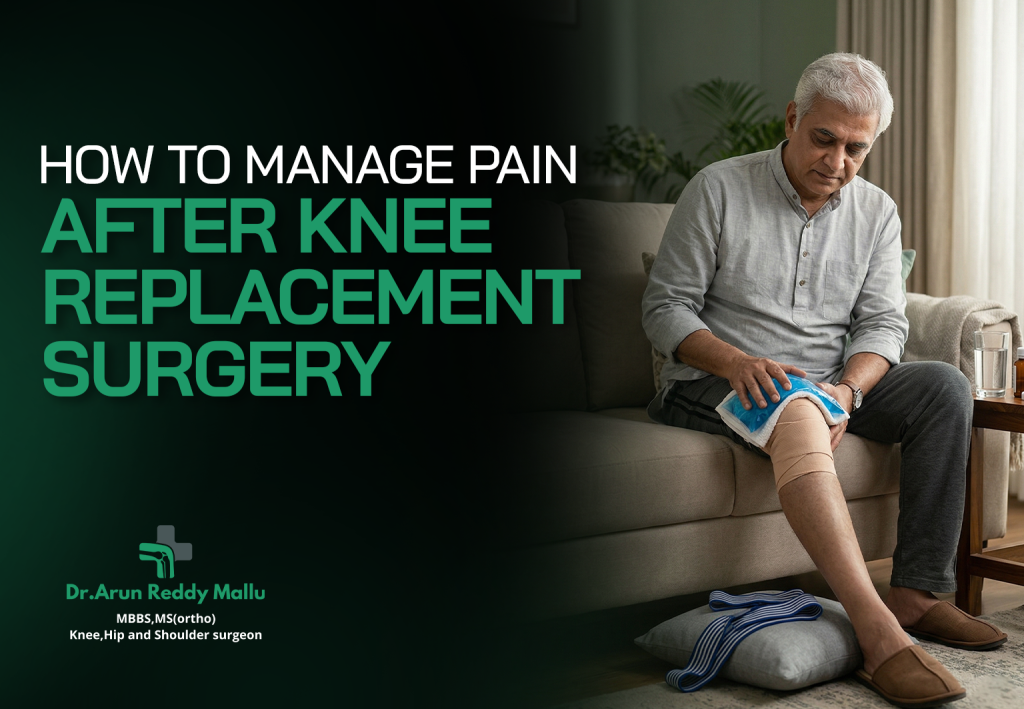
Knee replacement surgery, also known as total knee arthroplasty, is a highly effective procedure for relieving chronic knee pain and restoring mobility. However, managing postoperative discomfort is a crucial part of recovery. Many patients experience swelling, stiffness, and varying levels of pain during the healing phase. Understanding how to manage this pain effectively can speed up recovery and improve overall outcomes. If you are looking for expert care for Pain After Knee Replacement Surgery in Hyderabad, consulting an experienced orthopedic specialist Dr. Arun Reddy Mallu at Continental Hospitals can ensure proper guidance and a smoother recovery journey. Understanding Pain After Knee Replacement Surgery Pain after knee replacement surgery is a normal part of the healing process. It usually peaks in the first few days after surgery and gradually decreases over weeks. Patients may experience: Swelling around the knee Bruising and tenderness Stiffness and limited movement Mild to moderate discomfort during activity These symptoms occur because the body is healing from surgical trauma. Pain and swelling may last for several weeks, while mild swelling can persist for a few months. Why Pain Management Is Important Proper pain management is essential not just for comfort but also for recovery. Poorly managed pain can: Delay physical therapy progress Reduce mobility Affect sleep and mental health Increase the risk of complications Effective pain control helps patients stay active, follow rehabilitation programs, and regain knee function faster. Effective Ways to Manage Pain After Knee Replacement Surgery Take Prescribed Medications Doctors usually prescribe pain relief medications after surgery. These may include: Opioids (short-term use) for severe pain NSAIDs like ibuprofen for inflammation Acetaminophen for mild to moderate pain It is important to follow your doctor’s instructions carefully to avoid side effects or dependency. Pain medications are typically reduced gradually as recovery progresses. Use Ice Therapy Cold therapy is one of the most effective ways to reduce pain and swelling. Apply ice packs for 15–20 minutes at a time Use 3–4 times daily during early recovery Always place a cloth between ice and skin Ice helps numb the area and reduce inflammation, providing immediate relief. Elevate Your Leg Keeping your leg elevated helps reduce swelling and discomfort. Elevate the leg above heart level Use pillows for support Practice this several times a day This improves blood circulation and minimizes fluid buildup in the knee joint. Follow Physical Therapy Physical therapy is a cornerstone of recovery after knee replacement surgery. Helps restore movement and flexibility Strengthens surrounding muscles Improves blood flow and reduces stiffness Exercises prescribed by your physiotherapist are designed to gradually improve knee function. Skipping therapy can lead to prolonged pain and stiffness. Stay Active (But Don’t Overdo It) Gentle movement is essential for recovery. Start walking with support within a few days Perform light exercises regularly Avoid high-impact activities like jumping or twisting Movement helps prevent stiffness and improves circulation, but overexertion can worsen pain. Wear Compression Stockings Compression stockings are often recommended after surgery. Reduce swelling Prevent blood clots Improve circulation They are usually worn for a few weeks after surgery as part of post-operative care. Practice Proper Rest and Sleep Rest is equally important as activity. Balance exercise with adequate rest Maintain a comfortable sleeping position Use pillows for knee support Relaxation techniques like deep breathing can also help reduce pain perception and stress. Maintain a Healthy Diet Nutrition plays a key role in healing. Eat protein-rich foods for tissue repair Include anti-inflammatory foods like fruits and vegetables Stay hydrated A healthy diet speeds up recovery and helps reduce inflammation. Manage Swelling Effectively Swelling is one of the main causes of pain after surgery. To control swelling: Apply ice regularly Elevate the leg Perform prescribed exercises Avoid standing for long periods Swelling usually reduces significantly within a few weeks but may take months to completely subside. Use Assistive Devices Using support devices can prevent strain on the knee. Walkers or crutches Knee braces (if recommended) Supportive footwear These tools help maintain balance and reduce pressure on the healing joint. Tips for Faster Recovery To recover quickly and reduce pain: Follow your doctor’s advice strictly Attend all follow-up appointments Keep the surgical wound clean and dry Avoid sudden movements Stay consistent with physiotherapy Recovery timelines vary, but most patients notice significant improvement within 6–12 weeks. When to See a Doctor While some pain is normal, you should consult your doctor if you experience: Severe or increasing pain Excessive swelling or redness Fever or signs of infection Difficulty moving the knee Sudden calf pain (possible blood clot) Early medical intervention can prevent serious complications. Expert Care in Hyderabad If you are experiencing Pain After Knee Replacement Surgery in Hyderabad, getting expert guidance is essential. Dr. Arun Reddy Mallu at Continental Hospitals specializes in advanced orthopedic care and post-surgical rehabilitation. With personalized treatment plans, modern techniques, and patient-focused care, patients can recover faster and regain mobility with minimal discomfort. Conclusion Managing pain after knee replacement surgery is a vital part of the healing process. While discomfort is expected, it can be effectively controlled with the right combination of medication, physical therapy, lifestyle adjustments, and proper care. Simple steps like icing, elevating the leg, staying active, and following medical advice can make a significant difference in recovery. Patience and consistency are key—healing takes time, but the results are worth it. Manage pain effectively after knee replacement with expert care from Dr. Arun Reddy Mallu at Continental Hospitals—call +91 9959135963 today.
Why More Surgeons Are Choosing Robotic Knee Replacement Surgery
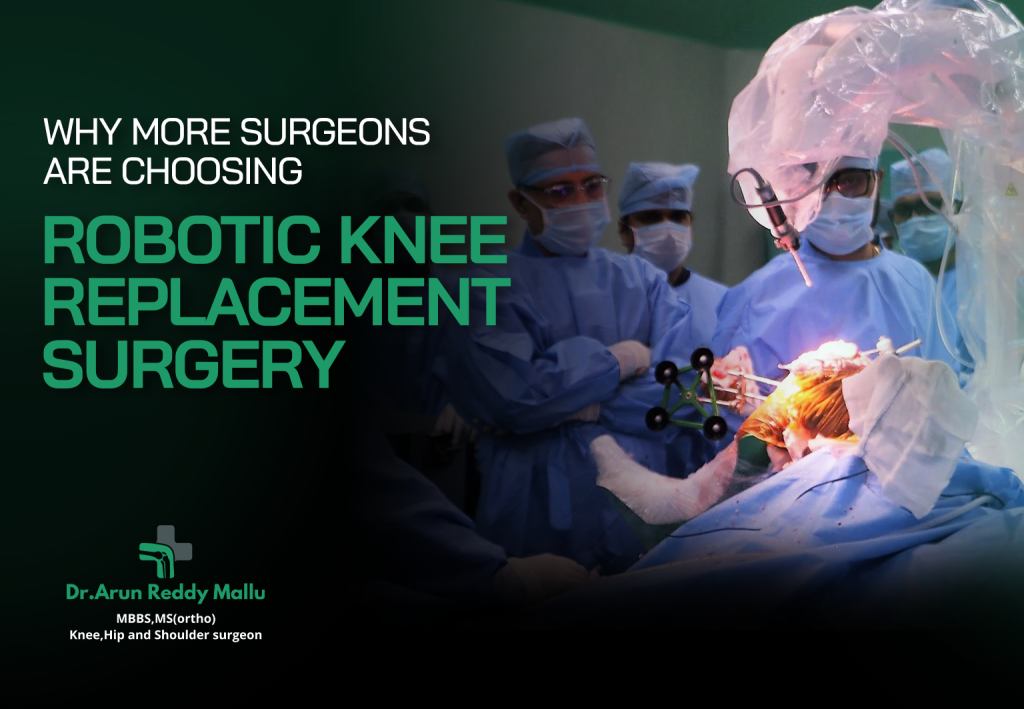
Orthopaedic surgery has witnessed remarkable advancements over the past decade, and one of the most significant breakthroughs is robotic-assisted knee replacement. Surgeons worldwide are increasingly adopting this modern technique because it enhances precision, improves patient outcomes, and offers a higher level of control during surgery. In India, especially in Hyderabad, experienced specialists Orthopedic surgeon Dr. Arun Reddy Mallu at Continental Hospital are utilizing robotic technology to deliver advanced and reliable joint replacement treatments. What Is Robotic Knee Replacement Surgery? Robotic knee replacement surgery is an advanced procedure where a robotic system assists the surgeon in performing the operation with exceptional accuracy. It is important to understand that the robot does not replace the surgeon—it acts as a supportive tool that enhances the surgeon’s capabilities. Using detailed 3D imaging, the surgeon can create a personalized surgical plan based on the patient’s unique anatomy. During the procedure, the robotic system provides real-time feedback, ensuring precise bone cuts and accurate implant placement. Superior Precision and Accuracy One of the primary reasons surgeons prefer robotic-assisted surgery is the unmatched level of precision. Even a small error in alignment during traditional knee replacement can lead to long-term complications. With robotic systems, surgeons can: Map the knee joint in detail Plan every step before surgery Execute bone cuts with high accuracy This results in better implant positioning and improved joint function. Personalized Treatment Approach Every patient’s knee structure is different. Robotic technology allows surgeons to customize the procedure according to the individual’s anatomy rather than following a standard approach. This personalization helps: Achieve more natural knee movement Improve comfort after surgery Increase overall patient satisfaction Because of this tailored approach, outcomes are more predictable and effective. Enhanced Control and Safety Robotic systems provide surgeons with better control throughout the procedure. They create predefined safety boundaries, ensuring that only the targeted area is operated on. This reduces: Damage to surrounding tissues Risk of surgical errors Chances of complications The surgeon remains in full control, but with advanced guidance that enhances safety and precision. Minimally Invasive Technique Another major advantage is that robotic-assisted surgery is less invasive compared to traditional methods. Benefits include: Smaller incisions Less tissue damage Reduced blood loss For surgeons, this means a cleaner and more controlled procedure. For patients, it translates into less pain and faster healing. Faster Recovery and Rehabilitation One of the biggest goals of any surgeon is to help patients recover quickly. Robotic-assisted knee replacement supports faster rehabilitation due to its precision and minimally invasive nature. Patients often experience: Reduced post-operative pain Shorter hospital stays Faster return to daily activities In many cases, patients are able to start walking within a day or two after surgery. Improved Long-Term Results Long-term success is a key factor in knee replacement procedures. Poor alignment can lead to implant wear, discomfort, or even the need for revision surgery. Robotic technology ensures: Accurate implant positioning Better joint alignment Longer implant lifespan This leads to durable results and higher patient satisfaction over time. Consistency in Surgical Outcomes Traditional surgeries may vary depending on the surgeon’s experience and intraoperative challenges. Robotic systems help standardize procedures, leading to consistent and reliable results. Surgeons benefit from: Reduced variability Greater confidence Improved surgical success rates This consistency is one of the main reasons why more surgeons are adopting robotic technology. Reduced Risk of Complications With better planning and precise execution, robotic-assisted surgery minimizes potential risks. These include: Implant misalignment Tissue damage Joint instability Post-surgical complications This makes the procedure safer and more efficient for both surgeons and patients. Adoption of Advanced Technology Robotic systems represent the future of orthopaedic surgery. They combine: High-resolution imaging Real-time navigation Data-driven precision Surgeons who adopt this technology are better equipped to handle complex cases and deliver optimal results. Increasing Patient Awareness and Demand Today’s patients are more informed and actively seek advanced treatment options. Many prefer robotic-assisted procedures because of the benefits they offer. This growing demand encourages surgeons to adopt robotic techniques and stay updated with the latest advancements in medical technology. Expertise Still Matters While robotic systems enhance surgical precision, the skill and experience of the surgeon remain crucial. A well-trained orthopedic specialist can fully utilize the capabilities of robotic technology to achieve the best outcomes. Experts Dr. Arun Reddy at Continental Hospital are known for combining advanced techniques with clinical expertise to ensure safe and successful surgeries. Robotic Knee Replacement Surgery in Hyderabad The availability of advanced healthcare infrastructure has made Robotic Knee Replacement Surgery in Hyderabad increasingly accessible. Leading hospitals and skilled surgeons are offering world-class treatment, making the city a preferred destination for joint replacement procedures. Patients can benefit from cutting-edge technology along with expert medical care. Conclusion Robotic-assisted knee replacement surgery is transforming the field of orthopaedics. Its ability to provide superior precision, personalized treatment, and faster recovery has made it a preferred choice among surgeons worldwide. From improved accuracy to better long-term outcomes, the advantages are significant. However, the success of the procedure depends not only on technology but also on the expertise of the surgeon. Specialists Dr. Arun Reddy Mallu at Continental Hospital are leading this transformation by integrating advanced robotic systems with expert care. As medical technology continues to evolve, robotic knee replacement is set to become the standard approach for treating severe knee conditions—offering patients a safer, more effective, and long-lasting solution. Book your appointment for robotic knee replacement surgery at Continental Hospitals with Dr. Arun Reddy Mallu—call +91 99591 35963 today
Restoring Stability in Chronic Patellar Instability – A Combined Surgical Approach in a Young Active Patient
A real patient story of how recurrent kneecap dislocation was permanently fixed at Continental Hospitals, Hyderabad by Dr. Arun Reddy Mallu, a distinguished orthopaedic & robotic knee replacement surgeon at Continental Hospitals. The Problem: A Kneecap That Wouldn’t Stay in Place Imagine this. You’re 29 years old. You’re walking around your house. You bend your knee slightly and suddenly; your kneecap slides out of place. The pain is sharp. You can’t walk properly. And you’re left wondering – why did this happen again? That was Priya’s life. (Name changed.) For almost 3 years, her right kneecap kept dislocating, slipping out of its place again and again. Not because she fell. Not because of any accident or sports injury. It just happened on its own, without any warning. And every time it happened, the fear got worse. She started changing the way she lived: She stopped playing sports entirely. She began walking slowly and carefully always scared the knee would give way. Simple daily activities climbing stairs, going to the market became stressful. Her confidence dropped. Her independence was slipping away. She had already visited multiple hospitals. She had tried physiotherapy and medicines. But nothing worked for long. The kneecap would dislocate again, and the whole painful cycle would start over. That’s when someone guided her to Continental Hospitals, Hyderabad and to Dr. Arun Reddy Mallu. “Why Does Kneecap Keep Dislocating?” – The Real Answer This is the most common question patients with recurrent kneecap dislocation ask. And most of them have never received a proper answer. When Priya came to Dr. Arun Reddy Mallu, he didn’t just look at her knee. He looked deeper – at the structure of her knee, the shape of her bones, and the condition of her ligaments. After a thorough examination and detailed imaging, three separate problems were found – each one making her kneecap instability worse: 3 Reasons Her Kneecap Kept Dislocating Reason 1: The Groove in Her Knee Was Too Shallow Think of the kneecap like a ball sitting inside a bowl. Normally, the bowl is deep enough to keep the ball in place. In Priya’s case, the bowl was almost flat. So the kneecap had no real support — it could slide out very easily. Reason 2: Her Kneecap Was Sitting Too High Her kneecap was positioned slightly higher than normal. This meant it took too long to settle into the groove when she bent her knee – leaving it unstable and vulnerable during everyday movements. Reason 3: A Torn Inner Ligament There is a ligament on the inner side of the knee that acts like a seatbelt for the kneecap -stopping it from sliding outward. Priya’s was torn and not working. Without it, there was nothing to stop the kneecap from popping out. This is why previous treatments had failed. They were addressing only one problem at a time – or not addressing the bone structure at all. A partial fix was never going to work here. All three problems needed to be corrected together in a single surgery. The Surgery: Fixing the Bone and Rebuilding the Ligament Dr. Arun Reddy Mallu designed a clear plan: fix the root cause, not just the symptoms. The surgery had two parts – both performed together in a single operation. Here’s what happened, explained simply: Part 1 – Moving the Kneecap Anchor to the Right Position The kneecap is connected to the shin bone by a strong tendon. The point where this tendon attaches to the shin bone was in the wrong position – it was pulling the kneecap sideways and upward. Dr. Arun Reddy Mallu moved this attachment point slightly downward and slightly inward to bring the kneecap to the correct position, so it could sit properly inside the groove. Small orthopaedic screws were used to hold the bone in its new position. This is called kneecap realignment surgery and it directly corrects the structural problem that was causing the kneecap to dislocate. Part 2 – Rebuilding the Torn Inner Ligament The torn inner ligament – the kneecap’s natural seatbelt was completely rebuilt. A small tendon from the back of Priya’s own thigh was used as a replacement. This is her own natural tissue it bonds well with the knee and becomes a permanent part of the joint. This rebuilt ligament now acts as a strong check on the kneecap. Every time the knee bends and straightens, the ligament keeps the kneecap from sliding outward. This is called MPFL reconstruction – one of the most effective treatments for recurrent kneecap dislocation. Together, these two procedures gave Priya’s knee what it had been missing for 3 years: a proper bone structure to hold the kneecap in place, and a strong ligament to keep it there. AP View (Front View) Lateral View (Side View) Postoperative X-rays showing screw fixation and successful bone realignment after kneecap stabilisation surgery The Week by Week Recovery: Priya started physiotherapy within days of the surgery. Her recovery was structured, supervised, and steady. Recovery Week What Happened Week 1 – 2 Pain was reducing. Started gentle movement and light exercises. Week 3 – 4 Walking with support. Knee felt noticeably more stable. Week 5 – 6 Walking without any support. No dislocation episode at all. Week 7 – 8 Walking normally. Zero pain. Zero fear. Full confidence restored. At the 8-week follow-up appointment, the results were clear. The kneecap had not dislocated even once since surgery. Her range of motion was completely restored. She was walking normally – no guarding, no fear, no support needed. Postoperative photograph showing early knee bending achieved within days of kneecap stabilisation surgery In 8 weeks, she went from being afraid to walk across a room to living her normal life again. 8-Week Post-Op Recovery — Patient Walking Without Support After MPFL Reconstruction. Before Surgery vs. After Surgery: The Full Transformation Before Surgery After Surgery (8 Weeks) Kneecap dislocating repeatedly Zero dislocations after surgery Walking in fear, guarded every step
Best Robotic Knee Replacement Surgeon in Hyderabad
Knee pain can significantly affect your daily life, making simple activities like walking, standing, or climbing stairs difficult. With the advancement of medical technology, robotic knee replacement surgery has become a highly effective and precise solution for severe knee conditions. If you are searching for the best robotic knee replacement surgeon in Hyderabad, Dr. Arun Reddy Mallu at Continental Hospitals is known for delivering excellent results with advanced techniques and patient-focused care. What is Robotic Knee Replacement Surgery? Robotic knee replacement is an advanced surgical procedure where a robotic system assists the surgeon in performing knee replacement with exceptional accuracy. It enhances the surgeon’s ability to plan and execute the surgery based on the patient’s unique anatomy. This technology helps in: Accurate implant positioning Better alignment of the knee joint Reduced damage to surrounding tissues Improved long-term results Unlike traditional methods, robotic-assisted surgery ensures consistency and precision, leading to better outcomes. Why Knee Replacement is Needed Knee replacement surgery is usually recommended when: Severe osteoarthritis damages the joint Chronic knee pain does not respond to medication Stiffness limits daily movement Knee deformities develop In such cases, robotic knee replacement provides long-lasting relief and restores mobility. Benefits of Robotic Knee Replacement Higher Accuracy The robotic system provides real-time feedback, allowing surgeons to perform precise bone cuts and implant placement. Minimally Invasive Technique Smaller incisions lead to less pain and quicker healing. Faster Recovery Patients can walk sooner and return to daily activities faster. Improved Implant Longevity Better alignment reduces wear and tear, increasing implant lifespan. Personalized Surgery Each procedure is customized based on the patient’s knee structure. About Dr. Arun Reddy Mallu Dr. Arun Reddy Mallu is an experienced orthopedic surgeon with MBBS, MS (Orthopedics). He performs 100+ surgeries every year and has completed around 1000+ knee replacement surgeries till now. He is known for his expertise in robotic knee replacement and patient care. Expertise Includes: Robotic knee replacement surgery Hip and shoulder joint replacements Arthroscopy and sports injury treatment Revision knee replacement surgeries He is known for his precision, dedication, and commitment to providing high-quality care to every patient. Why Choose Dr. Arun Reddy Mallu? Specialized in Robotic Surgery Dr. Arun Reddy has advanced training in robotic-assisted joint replacement, ensuring accurate and safe procedures. Experience in Complex Cases He successfully handles primary as well as revision knee replacement surgeries. Patient-Centered Care He focuses on personalized treatment plans and clear communication with patients. High Success Rate His expertise in robotic techniques results in better recovery and long-term outcomes. Trusted Name in Orthopedics Many patients choose him for his reliable approach and consistent results. Robotic Knee Replacement Procedure Pre-Surgical Planning A detailed 3D model of the knee is created to plan the surgery accurately. Robotic-Assisted Surgery The surgeon uses robotic guidance to perform precise bone cuts and implant positioning. Implant Placement Artificial components are placed with high accuracy. Post-Surgery Recovery Patients begin walking early with guided physiotherapy. Recovery After Surgery Recovery from robotic knee replacement is faster compared to traditional surgery. Recovery Timeline: Day 1–2: Standing and walking with assistance Week 2–3: Reduced pain and improved movement 4–6 Weeks: Return to normal daily activities 3 Months: Full recovery for most patients Following physiotherapy and doctor’s advice is crucial for a smooth recovery. Who Needs Robotic Knee Replacement? You may be a candidate if you have: Severe arthritis Chronic knee pain Limited mobility Failed previous knee surgery Consultation with an experienced surgeon helps determine the best treatment plan. Risks and Safety Robotic knee replacement is generally safe, but like any surgery, it may involve minimal risks such as: Infection Blood clots Implant-related issues Choosing an experienced surgeon Dr. Arun Reddy reduces these risks significantly. Cost of Robotic Knee Replacement in Hyderabad The cost depends on: Type of implant used Hospital facilities Complexity of the condition Despite the cost, robotic surgery offers better accuracy and long-term benefits, making it a valuable investment in your health. Conclusion Robotic knee replacement is a breakthrough in orthopedic treatment, offering precision, faster recovery, and long-lasting results. Selecting the right surgeon is essential for a successful outcome. If you are looking for the best robotic knee replacement surgeon in Hyderabad, Dr. Arun Reddy Mallu at Continental Hospitals is a trusted choice. His expertise in robotic surgery, patient-focused approach, and commitment to excellence ensure that patients regain mobility and lead a pain-free life. Take the first step towards a healthier and more active lifestyle by consulting an experienced specialist today. Book your consultation with Dr. Arun Reddy Mallu, the Best Robotic Knee Replacement Surgeon in Hyderabad, at Continental Hospitals — call +91 99591 35963 today.