Knee replacement surgery, also known as total knee arthroplasty, is a highly effective procedure for relieving chronic knee pain and restoring mobility. However, managing postoperative discomfort is a crucial part of recovery. Many patients experience swelling, stiffness, and varying levels of pain during the healing phase. Understanding how to manage this pain effectively can speed up recovery and improve overall outcomes.
If you are looking for expert care for Pain After Knee Replacement Surgery in Hyderabad, consulting an experienced orthopedic specialist Dr. Arun Reddy Mallu at Continental Hospitals can ensure proper guidance and a smoother recovery journey.
Understanding Pain After Knee Replacement Surgery
Pain after knee replacement surgery is a normal part of the healing process. It usually peaks in the first few days after surgery and gradually decreases over weeks. Patients may experience:
- Swelling around the knee
- Bruising and tenderness
- Stiffness and limited movement
- Mild to moderate discomfort during activity
These symptoms occur because the body is healing from surgical trauma. Pain and swelling may last for several weeks, while mild swelling can persist for a few months.
Why Pain Management Is Important
Proper pain management is essential not just for comfort but also for recovery. Poorly managed pain can:
- Delay physical therapy progress
- Reduce mobility
- Affect sleep and mental health
- Increase the risk of complications
Effective pain control helps patients stay active, follow rehabilitation programs, and regain knee function faster.
Effective Ways to Manage Pain After Knee Replacement Surgery
- Take Prescribed Medications
Doctors usually prescribe pain relief medications after surgery. These may include:
- Opioids (short-term use) for severe pain
- NSAIDs like ibuprofen for inflammation
- Acetaminophen for mild to moderate pain
It is important to follow your doctor’s instructions carefully to avoid side effects or dependency. Pain medications are typically reduced gradually as recovery progresses.
- Use Ice Therapy
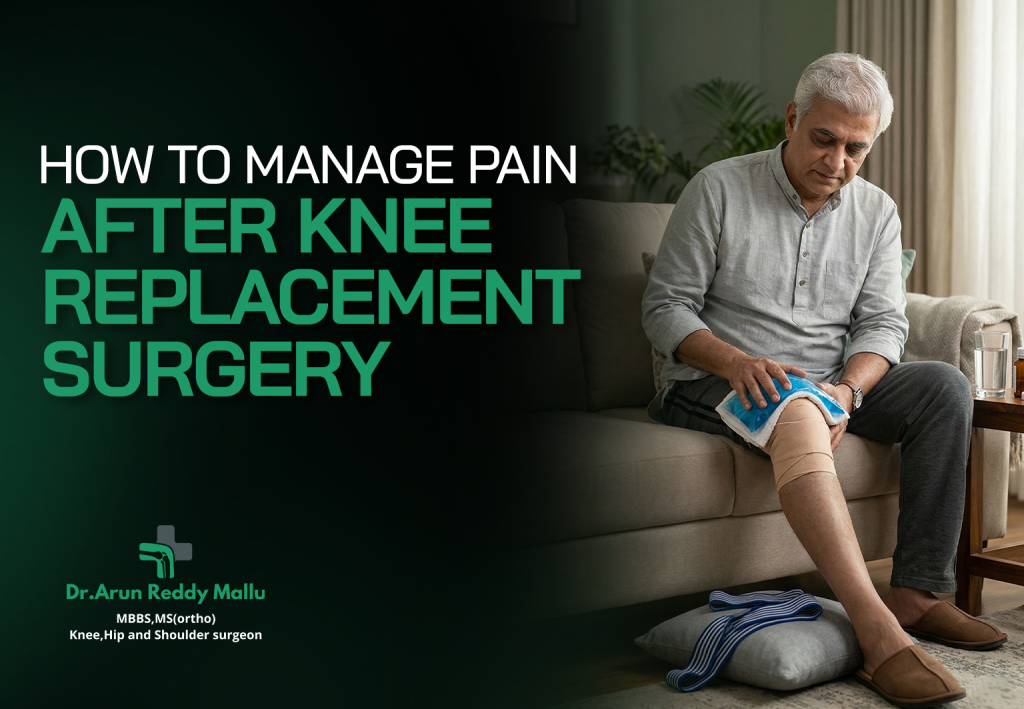
Cold therapy is one of the most effective ways to reduce pain and swelling.
- Apply ice packs for 15–20 minutes at a time
- Use 3–4 times daily during early recovery
- Always place a cloth between ice and skin
Ice helps numb the area and reduce inflammation, providing immediate relief.
- Elevate Your Leg
Keeping your leg elevated helps reduce swelling and discomfort.
- Elevate the leg above heart level
- Use pillows for support
- Practice this several times a day
This improves blood circulation and minimizes fluid buildup in the knee joint.
- Follow Physical Therapy
Physical therapy is a cornerstone of recovery after knee replacement surgery.
- Helps restore movement and flexibility
- Strengthens surrounding muscles
- Improves blood flow and reduces stiffness
Exercises prescribed by your physiotherapist are designed to gradually improve knee function. Skipping therapy can lead to prolonged pain and stiffness.
- Stay Active (But Don’t Overdo It)
Gentle movement is essential for recovery.
- Start walking with support within a few days
- Perform light exercises regularly
- Avoid high-impact activities like jumping or twisting
Movement helps prevent stiffness and improves circulation, but overexertion can worsen pain.
- Wear Compression Stockings
Compression stockings are often recommended after surgery.
- Reduce swelling
- Prevent blood clots
- Improve circulation
They are usually worn for a few weeks after surgery as part of post-operative care.
- Practice Proper Rest and Sleep
Rest is equally important as activity.
- Balance exercise with adequate rest
- Maintain a comfortable sleeping position
- Use pillows for knee support
Relaxation techniques like deep breathing can also help reduce pain perception and stress.
- Maintain a Healthy Diet
Nutrition plays a key role in healing.
- Eat protein-rich foods for tissue repair
- Include anti-inflammatory foods like fruits and vegetables
- Stay hydrated
A healthy diet speeds up recovery and helps reduce inflammation.
- Manage Swelling Effectively
Swelling is one of the main causes of pain after surgery.
To control swelling:
- Apply ice regularly
- Elevate the leg
- Perform prescribed exercises
- Avoid standing for long periods
Swelling usually reduces significantly within a few weeks but may take months to completely subside.
- Use Assistive Devices
Using support devices can prevent strain on the knee.
- Walkers or crutches
- Knee braces (if recommended)
- Supportive footwear
These tools help maintain balance and reduce pressure on the healing joint.
Tips for Faster Recovery
To recover quickly and reduce pain:
- Follow your doctor’s advice strictly
- Attend all follow-up appointments
- Keep the surgical wound clean and dry
- Avoid sudden movements
- Stay consistent with physiotherapy
Recovery timelines vary, but most patients notice significant improvement within 6–12 weeks.
When to See a Doctor
While some pain is normal, you should consult your doctor if you experience:
- Severe or increasing pain
- Excessive swelling or redness
- Fever or signs of infection
- Difficulty moving the knee
- Sudden calf pain (possible blood clot)
Early medical intervention can prevent serious complications.
Expert Care in Hyderabad
If you are experiencing Pain After Knee Replacement Surgery in Hyderabad, getting expert guidance is essential. Dr. Arun Reddy Mallu at Continental Hospitals specializes in advanced orthopedic care and post-surgical rehabilitation.
With personalized treatment plans, modern techniques, and patient-focused care, patients can recover faster and regain mobility with minimal discomfort.
Conclusion
Managing pain after knee replacement surgery is a vital part of the healing process. While discomfort is expected, it can be effectively controlled with the right combination of medication, physical therapy, lifestyle adjustments, and proper care.
Simple steps like icing, elevating the leg, staying active, and following medical advice can make a significant difference in recovery. Patience and consistency are key—healing takes time, but the results are worth it.
Manage pain effectively after knee replacement with expert care from Dr. Arun Reddy Mallu at Continental Hospitals—call +91 9959135963 today.