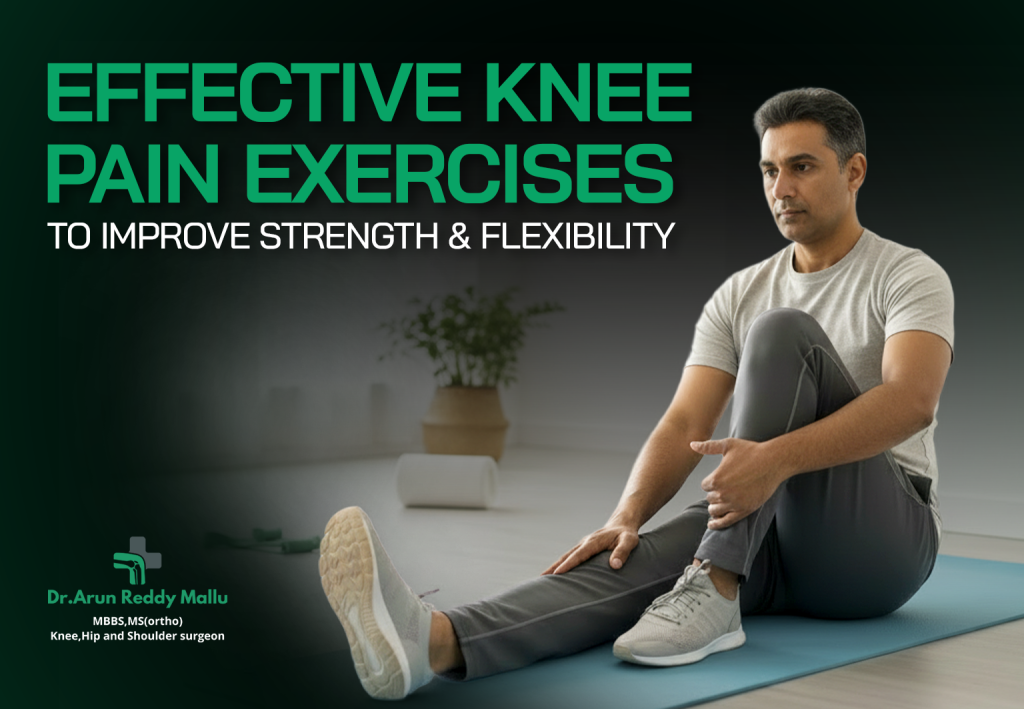
Effective Knee Pain Exercises to Improve Strength and Flexibility
Knee pain is one of the most common issues affecting people of all ages. Whether it’s due to arthritis, past injuries, strain from daily activities, or lack of muscle strength, knee discomfort can limit your mobility and affect your quality of life. The encouraging part is that exercise is one of the safest and most effective ways to manage knee pain naturally. When done correctly, the right exercises strengthen the muscles around the knee, improve joint support, and enhance flexibility.
This comprehensive guide covers the best knee pain treatment in Hyderabad exercises, how they help, what to avoid, and when to seek expert care — including guidance from Dr. Arun Reddy at Continental Hospital, who specializes in knee, hip, and shoulder conditions.
Why Exercises Help Knee Pain
Many people assume that rest is the best solution for knee pain. While rest is important during flare-ups, long-term inactivity can lead to muscle weakening, stiff joints, and worsening pain.
Exercise helps knee pain by:
- Strengthening supporting muscles
Strong quadriceps, hamstrings, glutes, and calf muscles act as shock absorbers. When these muscles are weak, the knee joint takes more pressure, leading to pain.
- Improving flexibility
Tight muscles pull the knee joint out of alignment. Stretching improves range of motion and reduces strain.
- Enhancing joint lubrication
Movement helps circulate synovial fluid, which nourishes and protects the cartilage.
- Improving balance and stability
Better stability reduces falls, missteps, and sudden twisting injuries.
- Supporting long-term joint health
For conditions like early osteoarthritis, regular exercise is proven to slow progression and reduce symptoms.
Warm-Up Before Exercising
A 5–10 minute warm-up increases blood flow and prepares your joints for movement.
Examples:
- Slow walking
- Gentle cycling
- Leg swings
- Marching in place
Best Strengthening Exercises for Knee Pain
Strength exercises are the foundation of knee pain management. These moves strengthen the muscles that support and stabilize the knee.
- Straight-Leg Raises
How to do it:
- Lie on your back with one knee bent and the other leg straight.
- Tighten the thigh muscle of the straight leg.
- Slowly lift it about 12–15 inches off the ground.
- Hold for 3–5 seconds and lower slowly.
Benefits:
Strengthens quadriceps without putting pressure on the knee joint.
Reps: 2–3 sets of 12–15 repetitions per leg.
- Mini Squats
How to do it:
- Stand with feet shoulder-width apart.
- Bend your knees slightly (20–30° only).
- Keep your chest upright and push hips back slightly.
- Return to standing.
Benefits:
Strengthens quads, glutes, and core with minimal knee strain.
Reps: 2–3 sets of 10–12.
- Hamstring Curls
How to do it:
- Hold a chair or wall for support.
- Bend one knee to bring your heel toward your buttocks.
- Hold 2–3 seconds, lower slowly.
Benefits:
Balances strength between front and back of thighs.
Reps: 2–3 sets of 10–15 reps.
- Step-Ups
How to do it:
- Use a low step.
- Step up with one foot and bring the other foot up.
- Step down slowly.
Benefits:
Improves functional strength used in stair climbing and daily activities.
Reps: 2–3 sets of 10 reps per leg.
- Glute Bridges
How to do it:
- Lie on your back with knees bent.
- Raise your hips until your body forms a straight line.
- Hold 2–3 seconds.
Benefits:
Strengthens glutes and hamstrings, reducing strain on the knees.
Reps: 2–3 sets of 12–15.
- Calf Raises
How to do it:
- Stand near a wall for support.
- Lift your heels and stand on your toes.
- Lower slowly.
Benefits:
Improves ankle mobility and shock absorption, helping knee alignment.
Reps: 2–3 sets of 15–20.
Best Flexibility & Stretching Exercises for Knee Pain
Flexibility routines complement strengthening exercises by reducing stiffness and improving mobility.
- Quadriceps Stretch
How to do it:
- Stand and hold your ankle behind you.
- Pull heel toward your buttocks.
- Keep knees close together.
Benefits:
Reduces strain on the knee cap and front thigh muscles.
Hold: 20–30 seconds per leg.
- Hamstring Stretch
How to do it:
- Sit with one leg stretched out.
- Lean forward with a straight spine.
- Avoid rounding your back.
Benefits:
Improves flexibility at the back of the thigh.
Hold: 20–30 seconds.
- Calf Stretch
How to do it:
- Stand against a wall.
- Keep one foot behind the other.
- Lean forward while keeping back heel on the floor.
Benefits:
Reduces lower leg tightness that can worsen knee pain.
Hold: 20–30 seconds.
- Hip Flexor Stretch
How to do it:
- Kneel on one knee and lunge forward.
- Keep upper body straight.
Benefits:
Tight hips can shift pressure to the knees — stretching them improves alignment.
Hold: 20–30 seconds.
- IT Band Stretch
How to do it:
- Cross one leg behind the other.
- Lean toward the side of the back leg.
- You will feel a stretch on the outer thigh.
Benefits:
Helps reduce friction and outer knee pain.
Hold: 20–30 seconds.
Low-Impact Cardio for Knee Health
Cardio helps maintain a healthy body weight and improves circulation to joints.
Great options include:
- Walking
- Cycling
- Elliptical trainer
- Swimming or water walking
These activities reduce stress on knees while improving endurance.
Weekly Routine to Follow (Beginner-Friendly)
Strength Training:
2–3 days per week
- Straight-leg raises
- Mini squats
- Glute bridges
- Step-ups
- Hamstring curls
- Calf raises
Stretching:
Daily
- Hamstrings
- Quads
- Calves
- IT band
- Hip flexors
Cardio:
20–30 minutes, 3–5 times per week.
When to Avoid Exercise
Stop or modify exercises if you experience:
- Sharp knee pain
- Sudden swelling
- Locking or catching of the knee
- Inability to bear weight
Pain that persists for more than 48 hours should be evaluated by a specialist.
When to Consult a Specialist
If knee pain is affecting your daily life, causing instability, or not improving even after consistent exercise, it’s time to seek expert advice.
For accurate diagnosis, personalized exercise plans, and advanced treatment options, you can consult Dr. Arun Reddy at Continental Hospital. He is experienced in treating knee, hip, and shoulder conditions, and can guide you from conservative treatments to advanced care if needed.
Conclusion
Knee pain can limit your mobility and affect your lifestyle, but a structured exercise routine focusing on strength, flexibility, and low-impact movement can significantly reduce symptoms and improve function. Strength exercises like straight-leg raises, mini squats, and step-ups help support the knee joint, while stretching improves mobility and reduces stiffness. Regular practice — even just 20 minutes a day — can create substantial improvements over time.
Strengthen your knees and improve flexibility with targeted exercises—contact Dr. Arun Reddy Mallu at Continental Hospitals today at +91 9959135963 for expert guidance.