Rotator Cuff Surgery – Shoulder pain, weakness, and difficulty lifting your arm can affect everyday activities such as dressing, combing your hair, reaching overhead, or playing sports. One common cause of these problems is a rotator cuff tear. When the injury becomes severe or does not improve with non-surgical treatment, Rotator Cuff Surgery may be recommended to restore shoulder function and reduce pain.
Understanding the procedure, its benefits, and the recovery process can help patients make informed decisions about their shoulder health.
What Is Rotator Cuff Surgery?
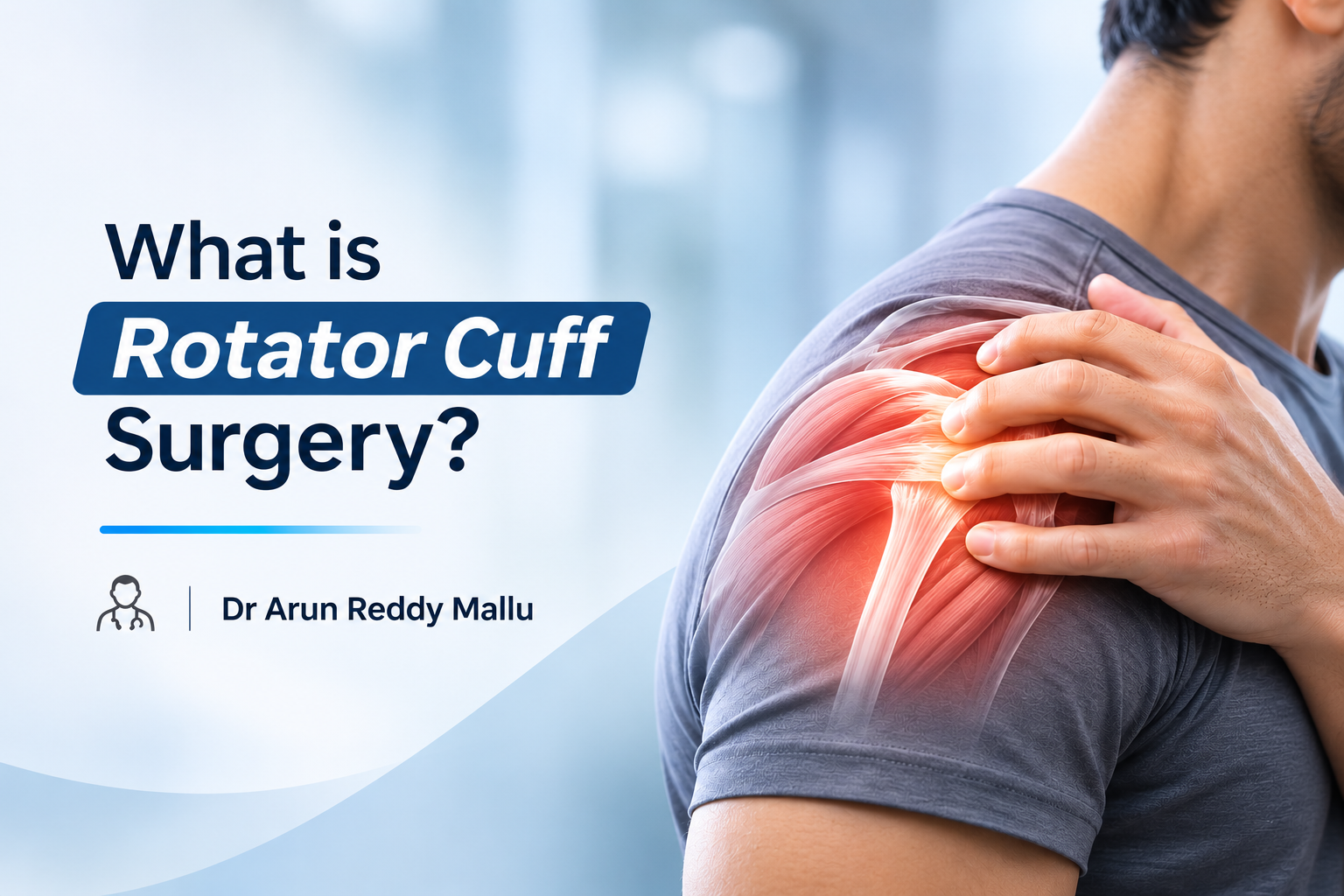
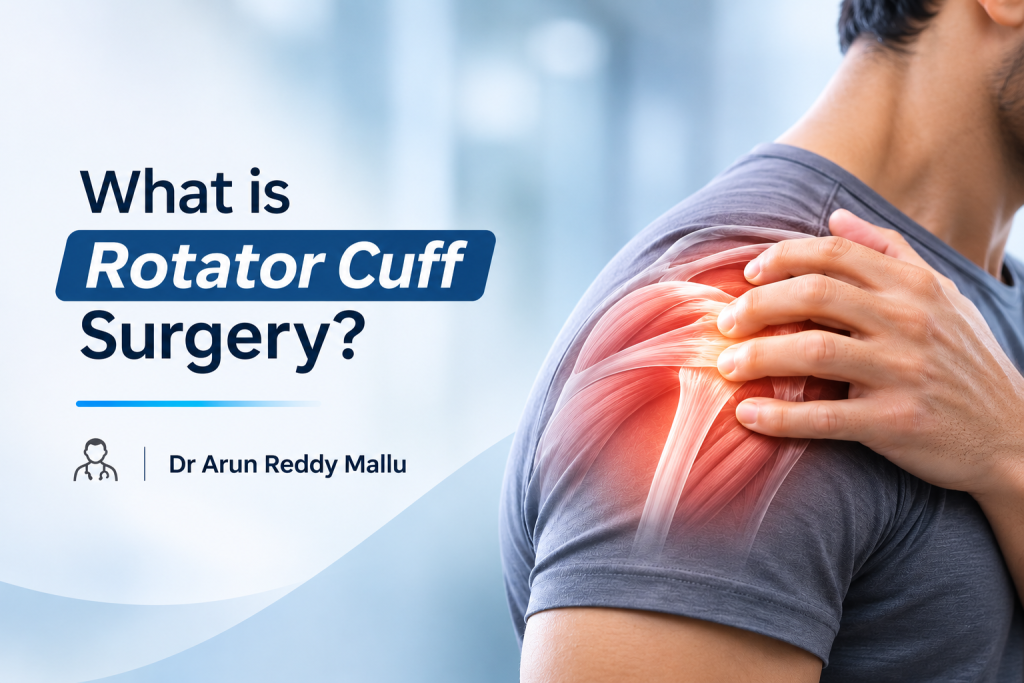
The rotator cuff is a group of four muscles and their tendons that surround the shoulder joint. These structures help keep the upper arm bone in the shoulder socket and allow you to lift and rotate your arm.
A rotator cuff tear occurs when one or more of these tendons become damaged or separate from the bone. Rotator Cuff Surgery is a procedure performed to repair the damaged tendon and reattach it to the upper arm bone when required.
In many cases, surgeons use arthroscopic techniques, which involve a small camera and specialised instruments inserted through small incisions around the shoulder.
When Is Rotator Cuff Surgery Required?
Not every rotator cuff injury requires an operation. Many patients initially improve with rest, activity modification, medication, and physiotherapy.
However, Rotator Cuff Surgery may be considered when:
- Shoulder pain continues despite non-surgical treatment.
- You experience significant weakness while lifting your arm.
- A traumatic injury causes a sudden rotator cuff tear.
- Pain interferes with sleep and daily activities.
- Imaging reveals a significant tear that may benefit from surgical repair.
The decision depends on the size of the tear, tendon condition, age, activity level, symptoms, and overall shoulder health.
How Is Rotator Cuff Surgery Performed?
Arthroscopic Rotator Cuff Surgery is commonly performed using minimally invasive techniques. The surgeon inserts an arthroscope, a small camera, into the shoulder joint through a tiny incision. Images from the camera are displayed on a monitor, helping the surgeon examine the damaged area.
Specialised instruments are then used to prepare the tendon and reattach it to the bone with sutures and small anchors when appropriate. The procedure may also involve treating other shoulder problems identified during surgery. The exact technique depends on the injury and the surgeon’s assessment.
Recovery After Rotator Cuff Surgery
Recovery is an important part of successful Rotator Cuff Surgery. The healing process varies depending on the tear size, repair technique, tendon quality, and individual health.
Patients may need to wear a shoulder sling or immobiliser to protect the repaired tendon during the initial healing period. A structured physiotherapy programme is then introduced according to the surgeon’s instructions.
Recovery generally involves:
- Protecting the shoulder during the early healing phase.
- Gradually improving shoulder movement.
- Starting strengthening exercises at the appropriate stage.
- Following the prescribed physiotherapy programme.
- Avoiding heavy lifting and strenuous activities until cleared.
Complete recovery can take several months. Patients should not rush rehabilitation because the repaired tendon needs sufficient time to heal.
Meet Dr Arun Reddy Mallu – Shoulder Specialist in Hyderabad
Dr Arun Reddy Mallu is a Senior Consultant in Orthopedics, Trauma, Arthroscopy, Joint Replacement, and Sports Medicine at Continental Hospitals, Hyderabad. He holds an MBBS and MS in Orthopedics and has over a decade of experience in orthopedic care.
His expertise includes advanced shoulder arthroscopic procedures, including rotator cuff repair and shoulder stabilisation. He focuses on understanding each patient’s condition and recommending an appropriate treatment and rehabilitation plan.
Patients considering Rotator Cuff Surgery can consult Dr Arun Reddy Mallu for an evaluation and guidance based on their shoulder condition.
Dr. Arun Reddy Mallu Contact Information
Call:- 9959135963
Whatsapp:- 9959135963
Facebook:- DrArunReddyMallu
Instagram:- drarunreddymallu
Youtube:- https://www.youtube.com/channel/UCt_XTYwyqpzloXtkTLblwxw
LinkedIn:- drarunmallu
Conclusion
A rotator cuff tear can affect shoulder strength, movement, and quality of life. When conservative treatments are not sufficient, Rotator Cuff Surgery may help repair the damaged tendon and improve shoulder function. Early evaluation, appropriate surgical planning, and consistent rehabilitation are important for recovery.
If persistent shoulder pain or weakness is affecting your daily activities, consult an experienced orthopedic shoulder specialist to understand your treatment options.
Rotator Cuff Surgery – FAQs
Que:- Is Rotator Cuff Surgery a major surgery?
Ans:- It is a specialised orthopedic procedure. Many repairs are performed arthroscopically through small incisions, but the complexity depends on the tear and the repair required.
Que:- How long does recovery take after Rotator Cuff Surgery?
Ans:- Recovery usually takes several months. The timeline depends on the tear size, tendon healing, surgical technique, and rehabilitation progress.
Que:- Can a rotator cuff tear heal without surgery?
Ans:- Some partial tears and less severe injuries can improve with physiotherapy, medication, and activity modification. Significant tears may require surgical evaluation.
Que:- Will I need physiotherapy after Rotator Cuff Surgery?
Ans:- Yes. Physiotherapy is an essential part of recovery and helps gradually restore shoulder movement, strength, and function.
Related Tags:-
- Best Orthopedic Surgeon in Hyderabad
- robotic knee replacement
- sports injury specialist
- ACL Reconstruction surgeon
- shoulder arthroscopy
- Joint Replacement Surgeon
- Signs of Joint Damage
- Muscle Injury Causes
- Sprained Your Ankle
- Hip Replacement Recovery
- Managing Knee Osteoarthritis
- Tips for Recovery after Knee Surgery
- Hip Arthritis
- Sports Injury Specialist in Gachibowli
- Your Hip Labral Tear Recovery
- Sprained Ankle Recovery
- Best Orthopedic Surgeon in Kokapet
- Best Orthopedic Doctor in Nanakramguda
- Orthopedic Surgeon Near Hitech City
- Heal a Torn Meniscus Naturally
- Parents Are Losing Balance While Walking
- Arthroscopic Surgery and Open Surgery
- Ideal Timing for Hip Replacement Surgery
- Shoulder Arthroscopy Surgery
- knee pain specialist in Gachibowli
- knee pain specialist in Madhapur
- knee pain specialist in Kondapur
- Knee Pain Specialist in Manikonda
- joint replacement surgeon Kokapet
- joint replacement surgeon in Hitech City
- joint replacement surgeon in Khajaguda
- Joint replacement surgeon in Narsingi
- Bone Specialist Doctor in Miyapur
- fracture treatment doctor in Gachibowli
- bone specialist doctor in Madhapur
- fracture treatment doctor in Kondapur
- sports injury doctor in Manikonda
- sports injury doctor Kokapet
- Sports Injury Doctor in Nanakramguda
- sports injury doctor in Hitech City
- Sports Injury Doctor in Khajaguda
- orthopaedic clinic near Narsingi
- best orthopaedic doctor in Manikonda
- Orthopaedic Doctor in Miyapur
- orthopaedic hospital in Kondapur
- Robotic Knee Replacement
- Robotic Knee Replacement in Hyderabad
- Total Knee Replacement
- Best Orthopaedic Doctor in Gachibowli
- Orthopedic Doctor in Gachibowli
- Knee Pain Specialist Gachibowli
- Best Orthopaedic Doctor in Madhapur
- Orthopedic Doctor in Madhapur
- Orthopaedic Hospital in Madhapur
- ACL Surgery
- Knee Replacement Surgeon
- ACL Meniscus Surgery
- Hip Replacement for Avascular Necrosis
- Orthopedic Shoulder Specialist
- Rotator Cuff Surgery