
Early vs. Delayed Knee Replacement: Which One Is Right for You?

Early vs. Delayed Knee Replacement: Which One Is Right for You? Knee pain can slowly take over your life—making it difficult to walk, climb stairs, or enjoy activities you once loved. When conservative treatments like medications, physiotherapy, injections, or lifestyle changes stop helping, doctors often recommend knee replacement surgery. But the big question most patients ask is: Should I get knee replacement surgery early, or wait until the pain becomes unbearable? Choosing between early and delayed knee replacement is a critical decision that affects your long-term mobility, comfort, and overall health. In this detailed guide, we break down both options so you can make an informed choice. We also discuss how expert surgeons like Dr. Arun Reddy Mallu at Continental Hospitals guide patients toward the safest and most effective treatment plan based on their condition. Understanding Knee Replacement Surgery Knee replacement, or knee arthroplasty, is a procedure where a damaged knee joint is replaced with an artificial implant. It is performed when the knee joint becomes severely worn out due to conditions like osteoarthritis, rheumatoid arthritis, old injuries, or degenerative changes. The goal of the surgery is to: Reduce chronic pain Improve mobility Restore quality of life Support long-term joint function Advancements such as robotic knee replacement have made the procedure more accurate, safer, and more predictable, offering faster recovery and fewer complications. What Is Early Knee Replacement? Early knee replacement refers to undergoing the surgery before the joint damage becomes extreme. Patients who choose this option typically have: Moderate pain affecting daily life Early to moderate joint degeneration Limited benefit from non-surgical treatments Difficulty performing long-distance walking or exercise Benefits of Early Knee Replacement Faster Recovery and Less Joint Damage When surgery is performed earlier, surrounding tissues are healthier and inflammation is lower, making recovery smoother and faster. Better Long-Term Outcomes Early surgery helps preserve your natural joint alignment and prevents further deterioration of cartilage, ligaments, and bone. Improved Quality of Life You can return to normal activities much sooner—like walking, traveling, exercising, or playing with your children or grandchildren. Reduced Use of Pain Medicines Delaying surgery sometimes forces patients to rely heavily on painkillers or steroid injections. Early intervention helps avoid long-term medication dependency. What Is Delayed Knee Replacement? Delayed or late knee replacement involves waiting until the pain becomes severe or until the joint damage reaches an advanced stage. Some choose delay because: They fear surgery They believe medications or physiotherapy may still work They want to postpone recovery time They are concerned about cost They are young and want to avoid implant wear-out Benefits of Delaying Knee Replacement More Time to Try Non-Surgical Treatments Physiotherapy, braces, weight loss, hyaluronic injections, and PRP therapy can sometimes manage symptoms for months or even years. Avoiding Early Implant Wear Artificial knee implants last around 15–20 years on average. Younger patients may choose to delay to avoid needing a revision surgery later. Emotional Comfort Some patients prefer postponing surgery until they feel mentally ready. Risks of Delayed Knee Replacement While delaying has a few advantages, it also comes with serious drawbacks: Increased Pain and Disability As arthritis worsens, mobility decreases, leading to more stiffness, swelling, and difficulty walking. Poorer Surgical Outcomes Patients who wait too long may have weaker muscles, severe bone deformities, or ligament damage, which can complicate surgery. Slower Postoperative Rehabilitation The weaker your knee is before surgery, the harder it becomes to regain strength afterward. Higher Risk of Falling Reduced mobility increases the chances of falls, fractures, and injury. Mental Health Impact Chronic pain often leads to frustration, depression, and social withdrawal. Who Should Consider Early Knee Replacement? Early replacement is the right choice if: Your pain impacts daily routines You can’t walk or stand for long Physiotherapy and medicines no longer help Your sleep is affected due to joint pain You want to maintain an active lifestyle Athletes, working professionals, and people who travel frequently often benefit the most from early intervention. Who Should Wait or Delay Knee Replacement? Delaying may be suitable for: Patients with mild symptoms Younger individuals concerned about implant life Those responding well to conservative treatments People with medical conditions requiring stabilization before surgery However, even while delaying, regular follow-ups with an orthopedic surgeon are essential to monitor joint progression. How Dr. Arun Reddy Mallu Helps You Decide Choosing early vs delayed surgery isn’t a one-size-fits-all decision. Dr. Arun Reddy Mallu, one of the leading orthopedic and joint replacement surgeons at Continental Hospitals, uses a personalized evaluation approach that includes: Detailed physical examination X-rays and imaging analysis Assessment of joint alignment Evaluation of ligament and cartilage condition Review of your lifestyle, goals, and medical history His expertise in robotic knee replacement ensures highly precise implant placement, reduced pain, and faster recovery—benefits especially useful for patients opting for early surgery. What Happens if You Wait Too Long? Patients who delay often reach a point where: Knee deformity increases (bow legs or knock knees) Walking becomes extremely painful They lose strength in thigh muscles Daily tasks like shopping or climbing stairs feel impossible At this point, the surgery becomes more complex, and the chances of a perfect outcome decrease. Early surgery often prevents this downward spiral. The Role of Technology in Choosing the Right Time Modern tools like robotic navigation, digital scanning, and 3D knee joint mapping have made knee replacement safer and more predictable than ever. These advancements: Improve accuracy Reduce tissue damage Speed up recovery Ensure long-term implant stability If you are hesitant about early surgery, discussing these advancements with your doctor can ease your concerns. How to Know If It’s Time: Key Signs to Watch For Here are some signs you should NOT ignore: Persistent pain for more than six monthsDifficulty standing or walking for longKnee locking or instabilityMinimal relief from physiotherapyStiffness that worsens in the morningFrequent swellingPain while climbing stairsReduced participation in social or work activities If you notice these signs, consult an orthopedic specialist for a proper assessment. Conclusion Early vs delayed knee replacement
Robotic Knee Replacement Recovery: When Can You Start Playing Sports Again?
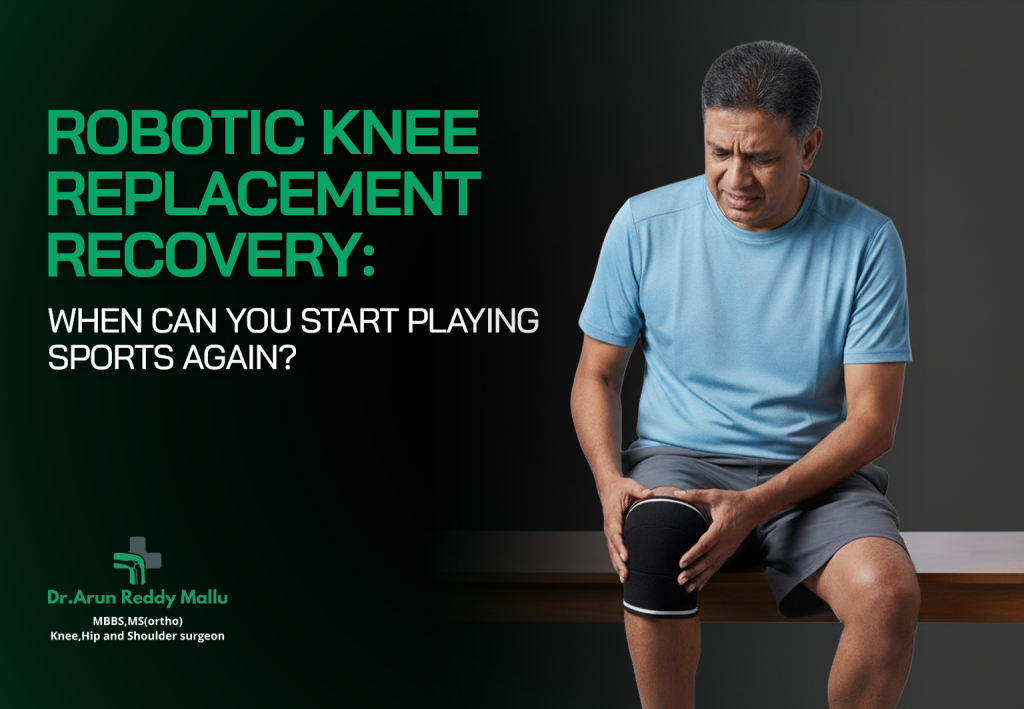
Robotic Knee Replacement Recovery: When Can You Start Playing Sports Again? Robotic knee replacement has transformed the way patients recover from knee pain, arthritis, and mobility issues. With its precision, minimally invasive approach, and faster recovery outcomes, more patients are choosing robotic-assisted surgery over traditional knee replacement. However, one of the most common concerns patients have is: “When can I start playing sports again after robotic knee replacement?” Returning to your favorite physical activities—whether it’s walking, jogging, badminton, cycling, yoga, or even more intense sports—depends on several factors. In this blog, we explore the recovery timeline, safe progression into sports, benefits of robotic technology, precautions, and expert insights from Dr. Arun Reddy Mallu, a leading knee replacement surgeon at Continental Hospitals, Hyderabad. Understanding Robotic Knee Replacement Robotic-assisted knee replacement is an advanced orthopedic procedure that uses computer-guided systems and robotic arms to enhance the accuracy of the surgery. The surgeon controls the robotic arm, ensuring perfect alignment, minimal tissue damage, and a personalized fit for the implant. Key advantages of robotic knee replacement include: Higher precisionin joint alignment Less soft tissue damageand muscle trauma Reduced blood loss Smaller incisions Faster recovery and reduced pain Long-lasting implant life These benefits play a major role in helping patients return to sports earlier than with conventional knee replacement. Typical Recovery Timeline After Robotic Knee Replacement Every patient recovers at their own pace, but robotic knee replacement often offers a smoother and more predictable recovery timeline. First 1–2 Weeks: Foundation Phase Pain and swelling start reducing. Patients typically begin walking with support on the same or next day after surgery. Simple movements, ankle pumps, and straight-leg raises are encouraged. Physical therapy focuses on improving flexibility and reducing stiffness. Weeks 3–6: Building Strength Most patients can walk without support by week 4. Strengthening exercises improve quadriceps, hamstrings, and calf muscles. Stationary cycling, gentle stretching, and low-impact activities begin. Swelling continues to reduce, and mobility improves significantly. Weeks 6–12: Returning to Daily Activities Patients regain around 70–80% of mobility. Light household activities and short outdoor walks are comfortable. Many people return to work depending on their profession. With doctor’s approval, low-impact sports can begin. 3–6 Months: Gradual Return to Sports Knee strength and stamina increase. Activities like swimming, cycling, yoga, golf, and brisk walking are usually allowed. Physio-guided training helps improve balance and agility. 6–12 Months: Full Return to Active Lifestyle Most patients safely resume sports like badminton, hiking, and doubles tennis. High-impact sports depend on individual healing, implant stability, and the surgeon’s guidance. When Can You Start Playing Sports Again? The ability to return to sports depends on: Age Type of implant Physical fitness Consistency with physiotherapy Overall knee function Doctor’s recommendations Below is a sport-wise breakdown: Safe Sports After Robotic Knee Replacement Walking & Brisk Walking – 2 to 4 Weeks Walking is essential for recovery. Most patients begin brisk walking within 3–4 weeks after robotic knee replacement. Indoor Cycling / Stationary Bike – 3 to 6 Weeks Helps improve range of motion and endurance without stressing the knee. Swimming – 6 Weeks Once the incision heals completely, swimming is one of the safest and most recommended post-surgery exercises. Yoga & Pilates – 2 to 3 Months Gentle stretching improves flexibility. Avoid deep squats or twisting movements until approved. Golf – 3 Months Most patients comfortably return to golf within three months with good balance and controlled swing movements. Badminton (Doubles) – 4 to 6 Months Doubles badminton minimizes rapid movements and impact. Start slow with warmups and soft footwork. Trekking / Hiking – 4 to 6 Months With strong muscles and balance, hiking becomes safe. Choose easy trails initially. Tennis (Doubles) – 6 Months and Above Doubles play reduces the need for sudden direction changes. Singles tennis may require more time. Sports to Avoid After Knee Replacement While robotic knee replacement offers excellent joint function, some high-impact sports should still be avoided to protect the implant: Running or jogging on hard surfaces Football Basketball Volleyball High-impact aerobics Contact sports These activities put repetitive stress on the knee joint and may reduce the lifespan of the implant. Why Robotic Knee Replacement Helps You Return to Sports Faster Improved Alignment Perfect alignment ensures smoother motion and less strain during sports activities. Personalized Implant Fit Robotic systems ensure each cut and angle matches your knee’s anatomy, enhancing stability. Less Soft-Tissue Damage Minimally invasive techniques allow faster healing and early movement. Reduced Pain Accurate surgical precision means less post-operative discomfort, giving patients confidence to be active sooner. Faster Rehabilitation Patients often begin physiotherapy early, which accelerates recovery. Expert Insights – Dr. Arun Reddy Mallu, Continental Hospitals Dr. Arun Reddy Mallu, one of Hyderabad’s leading orthopedic and robotic knee replacement specialists at Continental Hospitals, emphasizes that robotic technology ensures consistently better outcomes for active individuals. According to him: The precision of robotic systems significantly reduces recovery time. Patients regain mobility faster and feel more confident returning to sports. Proper physiotherapy and regular follow-ups are essential to achieving full sports readiness. He further explains that a personalized recovery plan is crucial for athletes, seniors, and physically active individuals who wish to return to their preferred sports safely. Tips to Safely Return to Sports After Robotic Knee Replacement Follow Your Physiotherapy Routine Skipping exercises slows healing and delays your return to sports. Start Slow and Progress Gradually Begin with low-impact activities and slowly increase intensity. Use Proper Footwear Reduces shock impact and protects your knees. Strengthen Core & Leg Muscles Improves balance and helps prevent injuries. Avoid Sudden Movements Twisting, deep bending, or jumping can stress the implant. Regular Follow-Ups Consult Dr. Arun Reddy Mallu at Continental Hospitals for periodic assessment to ensure the knee is ready for sports. Conclusion Robotic Knee Replacement offers a faster, smoother, and more precise recovery experience, making it easier for patients to return to their favorite sports safely. With improved implant alignment, reduced pain, and early mobility, robotic technology provides an excellent advantage for active individuals. Most
Robotic vs Manual Knee Surgery: Which One’s Better for You?
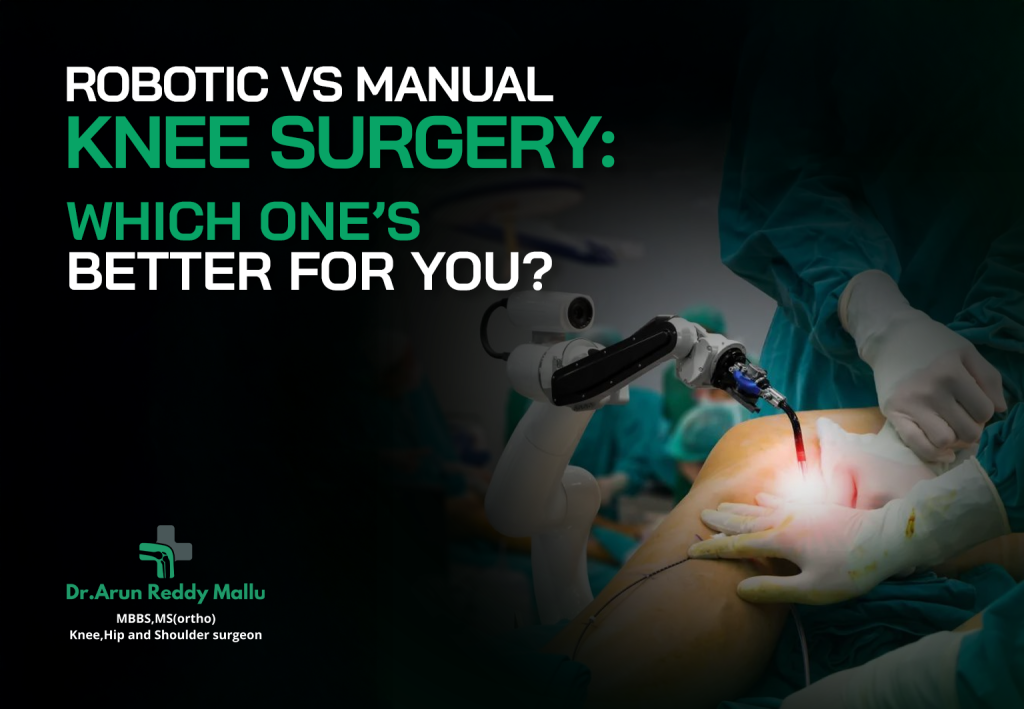
Robotic vs Manual Knee Surgery: Which One’s Better for You? When knee pain disrupts your ability to move freely or enjoy your daily life, knee replacement surgery becomes a promising solution. But with medical advancements continually reshaping surgical techniques, patients are now faced with a new decision: Robotic-Assisted Knee Surgery or Traditional Manual Knee Surgery? Both techniques aim to relieve chronic knee pain, improve mobility, and restore quality of life. However, they differ significantly in precision, recovery time, technology use, and overall outcome. If you’re considering knee surgery, it’s important to understand the pros and cons of each approach to make an informed decision tailored to your needs. What Is Manual Knee Replacement Surgery? Manual knee replacement surgery is the conventional method, performed for decades by orthopedic surgeons. It involves replacing the damaged or arthritic portions of the knee joint with artificial implants. The surgeon relies on visual assessment, manual tools, and physical measurements to position the implant. Although this method has a long history of success, it does have limitations in terms of precision and consistency. Outcomes can vary based on the surgeon’s experience, skill, and judgment during surgery. What Is Robotic-Assisted Knee Surgery? Robotic knee surgery doesn’t mean a robot performs the procedure independently. Instead, it’s a tool that assists skilled surgeons At Continental Hospitals, Dr. Arun Reddy Mallu uses robotic technology, enhancing their precision. Using advanced imaging, sensors, and a robotic arm, this technique allows for customized planning and millimeter-accurate execution. The robotic system maps the patient’s anatomy in 3D before and during surgery, helping the surgeon align and position the implant more precisely than with manual techniques. Key Differences: Robotic vs Manual Knee Surgery Precision and Alignment Manual Surgery: Implant placement is guided by the surgeon’s skill, and while experienced doctors achieve good outcomes, slight variations can occur. Robotic Surgery: The technology provides enhanced accuracy, allowing Robotic knee replacement surgeon Arun Reddy Mallu to plan implant placement down to the millimeter, improving joint alignment and longevity of the implant. Advantage: Robotic surgery Customization and Planning Manual: Involves standardized tools and general anatomical guidelines. Robotic: Uses CT or 3D imaging for personalized surgical plans, taking into account the patient’s unique anatomy and movement. Advantage: Robotic surgery offers a higher level of personalization. Surgical Incision and Bone Removal Manual: Often requires larger incisions and more bone to be removed to fit the implant properly. Robotic: Enables minimally invasive procedures with precise bone cutting, preserving more of the patient’s natural structure. Advantage: Robotic surgery typically results in less tissue trauma. Postoperative Recovery and Pain Manual: Recovery can take longer with more post-operative discomfort due to higher tissue trauma. Robotic: Patients generally report faster recovery, reduced pain, and a quicker return to normal activities. Advantage: Robotic surgery Surgical Consistency and Outcomes Manual: Results can vary between surgeons and even between procedures performed by the same surgeon. Robotic: Offers standardized precision across procedures, reducing variability. Advantage: Robotic surgery ensures consistency and predictable outcomes. Surgeon’s Expertise Still Matters While robotic systems provide better tools, they don’t replace the expertise of a skilled orthopedic surgeon. This is why choosing the right surgeon— Dr. Arun Reddy Mallu, who is experienced in both manual and robotic knee replacement—is crucial. His ability to combine clinical judgment with advanced technology ensures optimal outcomes. Which One Is Better for You? The decision depends on various factors, including: Your age and activity level The severity of your knee damage The condition of your bones and tissues Cost considerations The availability of robotic systems in your chosen hospital Your surgeon’s recommendation Robotic surgery is particularly beneficial for younger or more active patients who want the best alignment possible for long-term implant durability. It’s also ideal for patients looking for quicker recovery and minimal pain post-surgery. However, manual surgery remains a reliable and effective choice, especially in settings where robotic systems may not be accessible or when performed by a highly skilled surgeon. Common Myths About Robotic Knee Surgery Myth 1: A robot does the surgery alone. Reality: The surgeon controls the procedure at every step. The robot is just an advanced tool that enhances precision. Myth 2: Robotic surgery is risk-free. Reality: While robotic-assisted surgery reduces some risks, no surgery is without complications. But in experienced hands those of Dr. Arun Reddy Mallu, risks are minimized, and success rates are high. Myth 3: Recovery is instant with robotic surgery. Reality: While recovery can be faster, it still requires physiotherapy, rest, and care. Your body needs time to adapt to the new joint. Cost Considerations Robotic surgery can be slightly more expensive than manual due to the advanced technology and equipment involved. However, many patients find the investment worthwhile due to quicker recovery and fewer complications. Health insurance may cover part of the cost—be sure to consult your provider. Discuss the cost breakdown and benefits directly with your orthopedic specialist, such as At continental hospitals, Dr Arun Reddy Mallu uses MISSO robot, who can guide you based on your personal health goals and financial situation. Final Thoughts Which One Is Better? Robotic knee replacement surgery offers several advantages over traditional manual surgery, including greater precision, quicker recovery, less pain, and better implant alignment. However, manual surgery remains a proven option with decades of successful outcomes behind it. The best choice ultimately comes down to your individual condition, your health goals, and your surgeon’s recommendation. For the most accurate assessment, consult a trusted and experienced orthopedic surgeon. Dr. Arun Reddy Mallu, known for his expertise in advanced knee replacement techniques, can help you weigh your options and guide you toward the most effective treatment plan tailored to your lifestyle. Ready to Take the Next Step? If you’re struggling with chronic knee pain and want to explore your surgical options, consider booking a consultation with joint replacement surgeon Dr Arun Reddy Mallu . Whether you’re a candidate for robotic or manual knee surgery, his expertise ensures you’ll receive the highest standard of care, every step of the way. Dr. Arun Reddy Mallu at Continental Hospitals offers advanced