
Effective Knee Pain Exercises to Improve Strength and Flexibility
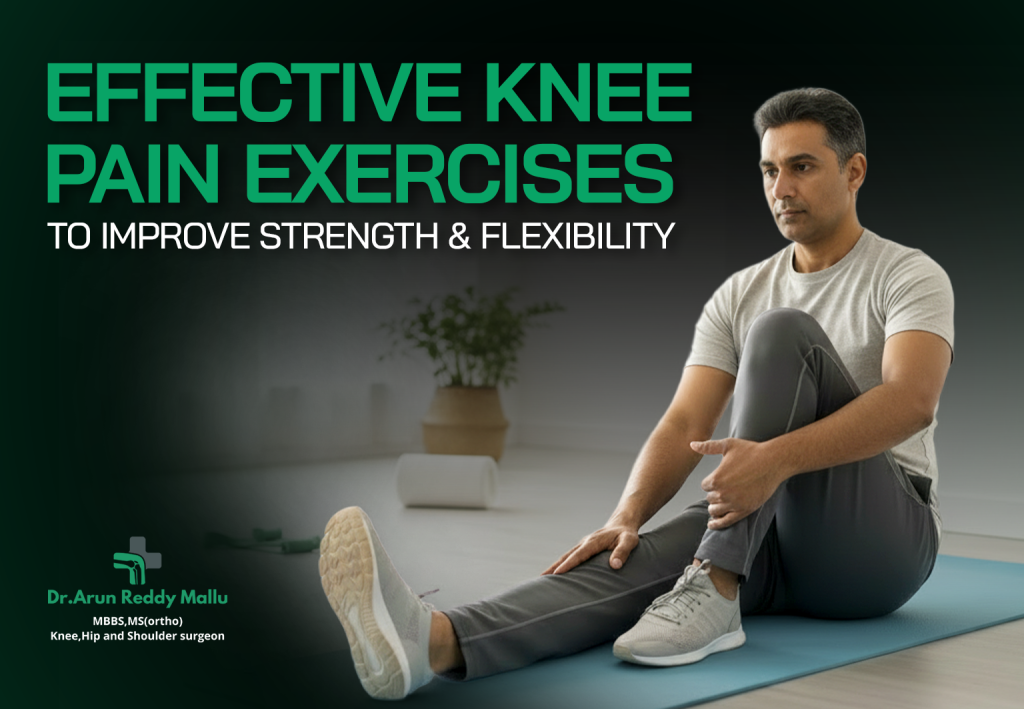
Effective Knee Pain Exercises to Improve Strength and Flexibility Knee pain is one of the most common issues affecting people of all ages. Whether it’s due to arthritis, past injuries, strain from daily activities, or lack of muscle strength, knee discomfort can limit your mobility and affect your quality of life. The encouraging part is that exercise is one of the safest and most effective ways to manage knee pain naturally. When done correctly, the right exercises strengthen the muscles around the knee, improve joint support, and enhance flexibility. This comprehensive guide covers the best knee pain treatment in Hyderabad exercises, how they help, what to avoid, and when to seek expert care — including guidance from Dr. Arun Reddy at Continental Hospital, who specializes in knee, hip, and shoulder conditions. Why Exercises Help Knee Pain Many people assume that rest is the best solution for knee pain. While rest is important during flare-ups, long-term inactivity can lead to muscle weakening, stiff joints, and worsening pain. Exercise helps knee pain by: Strengthening supporting muscles Strong quadriceps, hamstrings, glutes, and calf muscles act as shock absorbers. When these muscles are weak, the knee joint takes more pressure, leading to pain. Improving flexibility Tight muscles pull the knee joint out of alignment. Stretching improves range of motion and reduces strain. Enhancing joint lubrication Movement helps circulate synovial fluid, which nourishes and protects the cartilage. Improving balance and stability Better stability reduces falls, missteps, and sudden twisting injuries. Supporting long-term joint health For conditions like early osteoarthritis, regular exercise is proven to slow progression and reduce symptoms. Warm-Up Before Exercising A 5–10 minute warm-up increases blood flow and prepares your joints for movement. Examples: Slow walking Gentle cycling Leg swings Marching in place Best Strengthening Exercises for Knee Pain Strength exercises are the foundation of knee pain management. These moves strengthen the muscles that support and stabilize the knee. Straight-Leg Raises How to do it: Lie on your back with one knee bent and the other leg straight. Tighten the thigh muscle of the straight leg. Slowly lift it about 12–15 inches off the ground. Hold for 3–5 seconds and lower slowly. Benefits:Strengthens quadriceps without putting pressure on the knee joint. Reps: 2–3 sets of 12–15 repetitions per leg. Mini Squats How to do it: Stand with feet shoulder-width apart. Bend your knees slightly (20–30° only). Keep your chest upright and push hips back slightly. Return to standing. Benefits:Strengthens quads, glutes, and core with minimal knee strain. Reps: 2–3 sets of 10–12. Hamstring Curls How to do it: Hold a chair or wall for support. Bend one knee to bring your heel toward your buttocks. Hold 2–3 seconds, lower slowly. Benefits:Balances strength between front and back of thighs. Reps: 2–3 sets of 10–15 reps. Step-Ups How to do it: Use a low step. Step up with one foot and bring the other foot up. Step down slowly. Benefits:Improves functional strength used in stair climbing and daily activities. Reps: 2–3 sets of 10 reps per leg. Glute Bridges How to do it: Lie on your back with knees bent. Raise your hips until your body forms a straight line. Hold 2–3 seconds. Benefits:Strengthens glutes and hamstrings, reducing strain on the knees. Reps: 2–3 sets of 12–15. Calf Raises How to do it: Stand near a wall for support. Lift your heels and stand on your toes. Lower slowly. Benefits:Improves ankle mobility and shock absorption, helping knee alignment. Reps: 2–3 sets of 15–20. Best Flexibility & Stretching Exercises for Knee Pain Flexibility routines complement strengthening exercises by reducing stiffness and improving mobility. Quadriceps Stretch How to do it: Stand and hold your ankle behind you. Pull heel toward your buttocks. Keep knees close together. Benefits:Reduces strain on the knee cap and front thigh muscles. Hold: 20–30 seconds per leg. Hamstring Stretch How to do it: Sit with one leg stretched out. Lean forward with a straight spine. Avoid rounding your back. Benefits:Improves flexibility at the back of the thigh. Hold: 20–30 seconds. Calf Stretch How to do it: Stand against a wall. Keep one foot behind the other. Lean forward while keeping back heel on the floor. Benefits:Reduces lower leg tightness that can worsen knee pain. Hold: 20–30 seconds. Hip Flexor Stretch How to do it: Kneel on one knee and lunge forward. Keep upper body straight. Benefits:Tight hips can shift pressure to the knees — stretching them improves alignment. Hold: 20–30 seconds. IT Band Stretch How to do it: Cross one leg behind the other. Lean toward the side of the back leg. You will feel a stretch on the outer thigh. Benefits:Helps reduce friction and outer knee pain. Hold: 20–30 seconds. Low-Impact Cardio for Knee Health Cardio helps maintain a healthy body weight and improves circulation to joints. Great options include: Walking Cycling Elliptical trainer Swimming or water walking These activities reduce stress on knees while improving endurance. Weekly Routine to Follow (Beginner-Friendly) Strength Training:2–3 days per week Straight-leg raises Mini squats Glute bridges Step-ups Hamstring curls Calf raises Stretching:Daily Hamstrings Quads Calves IT band Hip flexors Cardio:20–30 minutes, 3–5 times per week. When to Avoid Exercise Stop or modify exercises if you experience: Sharp knee pain Sudden swelling Locking or catching of the knee Inability to bear weight Pain that persists for more than 48 hours should be evaluated by a specialist. When to Consult a Specialist If knee pain is affecting your daily life, causing instability, or not improving even after consistent exercise, it’s time to seek expert advice. For accurate diagnosis, personalized exercise plans, and advanced treatment options, you can consult Dr. Arun Reddy at Continental Hospital. He is experienced in treating knee, hip, and shoulder conditions, and can guide you from conservative treatments to advanced care if needed. Conclusion Knee pain can limit your mobility and affect your lifestyle, but a structured exercise routine focusing on strength, flexibility, and low-impact movement can significantly reduce symptoms and improve function. Strength exercises like straight-leg raises,
Preparing for a knee replacement: What You Need to Know About Knee Replacement Surgery

Preparing for a knee replacement: What You Need to Know About Knee Replacement Surgery A real-world look at the journey, the surprises, and the lessons no one really talks about Knee replacement is one of those things people don’t talk much about—until they have to. The idea of replacing a major joint feel overwhelming at first. And yet, for many, it becomes the only way back to walking without pain, standing without struggle, and living without limits. But even with all the medical information out there, many patients walk into knee replacement surgery unprepared—not for the operation itself, but for the emotional, physical, and mental journey that follows. So, here’s a closer look at what many patients wish they knew beforehand – the unspoken parts, the real expectations, and everything in between. The Symptoms Were More Than Just “Getting Older” One of the biggest mistake’s patients make is brushing off symptoms. Persistent pain is often written off as age-related, and stiffness is seen as something to “just live with.” But the truth is, signs like these shouldn’t be ignored: Pain that lingers even at rest Stiffness in the morning or after sitting A grinding or popping feeling in the joint Trouble doing everyday things-climbing stairs, walking long distances, or even standing to cook Swelling that doesn’t go away Shifting weight to the other leg or needing a cane Recognizing these symptoms early could have saved months-or even years-of discomfort for many. Surgery Isn’t a Quick Fix – It’s a Process Most assume that once the joint is replaced, the pain disappears. That’s far from reality. What many patients wish they’d known is this: recovery is just as important as the surgery – maybe more. The surgery itself takes about 1–2 hours. It’s what comes after that’s truly life-changing, and sometimes unexpectedly hard: Standing within 24 hours post-surgery Swelling and pain that may temporarily increase Needing help with basic tasks in the early days Emotional ups and downs from the sudden lifestyle shift Understanding the commitment to recovery helps manage expectations and avoid disappointment. Physical Therapy Is Not Optional-It’s Everything If there’s one universal truth about knee replacement recovery, it’s this: physical therapy is the key to getting your life back. It begins almost immediately and becomes a daily routine: Exercises to bend and straighten the knee Strengthening muscles around the joint Gradually increasing walking distance and endurance Pushing through stiffness and discomfort Skipping therapy or doing it half-heartedly slows progress and could limit long-term results. Patients often say, “I wish someone had told me how intense it would be – but how worth it, too.” The First Two Weeks Are a Turning Point Filled with Hope The first two weeks after knee replacement surgery often feel like stepping into the unknown-but they’re also filled with progress, courage, and quiet victories. While this early phase can be physically and emotionally demanding, it’s also the time when hope begins to feel real. Here’s what many patients experience: Pain is manageable with the right medication, and it gradually lessens every day Sleep may be tricky at first, but as swelling goes down, rest becomes easier Every small movement count-standing, walking a few steps, bending the knee—these are wins worth celebrating Emotions may rise and fall, but with each milestone comes renewed confidence and motivation These two weeks aren’t just about recovery-they’re about rediscovering strength and seeing the first signs of a better, pain-free life ahead. It’s the beginning of a transformation, and with the right support and mindset, hope grows stronger with each passing day. What helps most during this time? Having a support system (family, friends, caregivers) Creating a safe, clutter-free home setup Following doctor instructions without shortcuts Remembering that this phase is temporary, not permanent Knowing how tough-but normal-those early days are can ease the mental pressure. Recovery Isn’t Linear – And That’s Okay Progress doesn’t always go in a straight line. Some days feel like big wins-others feel like setbacks. But that’s just how healing works. A general timeline looks like: Weeks 1–2:Walking with a walker or crutches, starting therapy Weeks 3–6:Building strength, walking more independently By Month 3:Driving, doing light chores, longer walks 6–12 Months:Full recovery for most patients Comparing progress with others only creates unnecessary stress. What’s normal is a personal path forward, not a perfect one. There’s More to Recovery Than Just the Knee The journey affects more than the joint. Patients often wish they had known about: The emotional rollercoaster: Recovery can be isolating and emotionally draining The role of nutrition: A balanced, protein-rich diet aids healing The importance of sleep: Rest helps rebuild both body and mind Dealing with scar tissue: Regular massage and movement reduce stiffness Recovery is not just physical-it’s whole-body healing. It’s Worth It-But Only If You Commit Despite the pain, frustration, and weeks of rehab, most patients agree: it’s one of the best decisions they’ve made. But it doesn’t work like magic. It works because they worked at it. What they wish they knew earlier: How vital preparation was-mentally, physically, and logistically That setbacks don’t mean failure That pain improves slowly, and joy returns gradually That life post-surgery can be active, independent, and fulfilling again Final Thoughts Knee replacement surgery isn’t just a procedure-it’s a journey. Understanding what’s ahead makes it less intimidating and more empowering. From early signs to full recovery, being informed is the best way to walk into the operating room with confidence and come out stronger-step by step. Looking to explore expert knee care or surgery options? Your joint health deserves expert care. Explore Dr. Arun Reddy Mallu’s profile at Continental Hospitals and discover how his expertise in joint replacement can help you move better and live pain-free Learn more about advanced knee replacement solutions by visiting Dr. Arun Reddy Mallu’s profile at Continental Hospitals.