
Five Tips for Managing Tennis Elbow Effectively
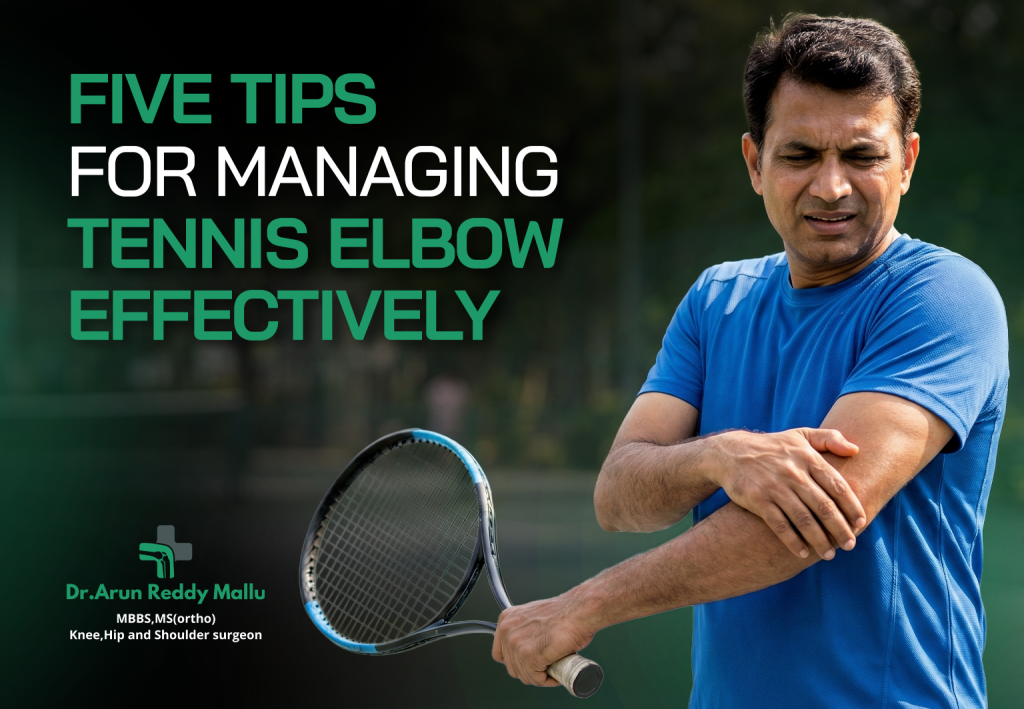
Tennis elbow—clinically known as lateral epicondylitis—is a common condition that affects people of all ages, not just athletes. Despite the name, you don’t have to play tennis to develop this painful condition. Repetitive motions involving the forearm and wrist—such as typing, lifting, painting, or even gardening—can strain the tendons that attach to the outer part of your elbow. Over time, tiny tears form in these tendons, leading to pain, weakness, and reduced function. Whether you’re an avid athlete, a weekend warrior, or someone whose daily routine involves repetitive arm movements, tennis elbow can disrupt your life. The good news? With proper management and care, most people recover fully without surgery. In this blog, we’ll explore five essential tips for managing tennis elbow effectively—from simple lifestyle changes to targeted treatments—so you can get back to the activities you love. Rest and Modify Activities Why Rest Matters When you first notice pain at the outside of your elbow, the most important step is to give your muscles and tendons a break. Continuing the same repetitive motions can worsen inflammation and delay healing. Practical Ways to Rest Pause problem activities:For example, if gardening or playing racquet sports is triggering pain, take a break or reduce the intensity. Modify techniques or tools:If you type a lot, adjust your workstation to keep your wrist neutral. If you lift weights, reduce the load or change your grip. Use adaptive equipment:Ergonomic keyboards, cushioned grips, or lighter tools can reduce strain. Instead of stopping all activity—a recipe for stiffness and weakness—focus on controlled activity modification. Avoid movements that sharply increase pain, but continue gentle, pain-free motion. Use Ice and Anti-Inflammatory Methods Ice Therapy for Pain Relief Applying ice to the affected area is a simple and effective way to reduce pain and inflammation, especially in the early stages of tennis elbow. How to Apply Ice: Wrap a cold pack or ice in a thin towel. Apply to the outside of your elbow for 15–20 minutes, 3–4 times a day. Avoid direct contact between ice and skin to prevent irritation. Anti-Inflammatory Medications Over-the-counter nonsteroidal anti-inflammatory drugs (NSAIDs), such as ibuprofen or naproxen, may help reduce pain and inflammation in the short term. However, these should be used judiciously and ideally under the guidance of a healthcare professional, especially if you have underlying medical conditions. Heat vs. Ice Once initial inflammation has improved (usually after a few days), some people find heat therapy helpful to relax tight muscles and improve blood flow. Heat can be applied with warm compresses or showers, but should be used cautiously—especially if swelling is still present. Try Eccentric Strengthening Exercises Physical therapy and specific exercises are the cornerstone of managing tennis elbow. Among the most effective are eccentric strengthening exercises, which focus on strengthening the forearm muscles as they lengthen under tension. Why Eccentric Exercises Work Tennis elbow involves microtears in the tendons. Eccentric training stimulates tendon healing and improves its ability to handle stress over time. Beginner Exercises Here are two commonly recommended exercises: Wrist Extensor Stretch Extend your arm straight in front of you with your palm facing down. Use your other hand to gently push your wrist down until you feel a stretch in the forearm. Hold for 15–30 seconds. Repeat 3–5 times, 2–3 times per day. Eccentric Wrist Extension Sit with your forearm supported on a table, palm facing down. Hold a light dumbbell (or a small water bottle). Use your opposite hand to lift the weight upward. Slowly lower the weight back down with the affected arm. Perform 3 sets of 10 repetitionsonce or twice a day. Consistency Is Key Progress may be gradual. You may experience some mild discomfort, but sharp pain is a sign to stop and modify the exercise. A physical therapist can tailor a program to your specific condition and ensure you’re performing movements safely. Try Bracing or Compression Support What Bracing Does Wearing a counterforce brace or forearm strap can help reduce stress on the injured tendons by redistributing force during activity. These braces are designed to compress the muscles slightly below the elbow, limiting tendon strain. When to Use a Brace During activities that trigger pain When returning to work or sports after a break To prevent symptoms from worsening during repetitive tasks A brace isn’t a cure—but it can be a valuable tool to decrease pain and allow you to stay active as you rehabilitate. Seek Professional Care When Needed While many cases of tennis elbow improve with conservative care, some situations benefit from professional intervention. Physical Therapy A trained physical therapist can: Assess your movement patterns Identify contributing factors (like poor technique or muscle imbalance) Design personalized strengthening and stretching programs Use modalities like ultrasound or manual therapy for pain relief Injections and Other Interventions In some cases, corticosteroid or platelet-rich plasma (PRP) injections may be recommended to control inflammation or support healing. These should always be discussed with a qualified physician. When to Consider Imaging If your symptoms persist beyond 6-12 weeks despite proper care, imaging studies like ultrasound or MRI may be recommended to assess the extent of tendon damage. Common Myths About Tennis Elbow Myth #1: Only Tennis Players Get It Not true! People in many professions—painters, plumbers, cooks, programmers, and even musicians—can develop tennis elbow due to repetitive use of the forearm muscles. Myth #2: Rest Alone Heals It While rest is crucial initially, inactivity alone isn’t enough. Healing requires progressive loading and strengthening of the tendon. Myth #3: Surgery Is Often Needed Most people recover with conservative treatments. Surgery is rare—typically reserved for severe or persistent cases unresponsive to other care. Lifestyle Tips to Prevent Recurrence Warm Up Before Activity Just like warming up before exercise, gentle wrist and forearm movements before repetitive or strenuous tasks can prepare your muscles and tendons. Improve Technique If you play sports, consider lessons to refine technique and reduce strain. In work settings, ergonomics evaluations can help reduce repetitive stress. Use Proper Equipment For example, using a lighter racquet with a softer