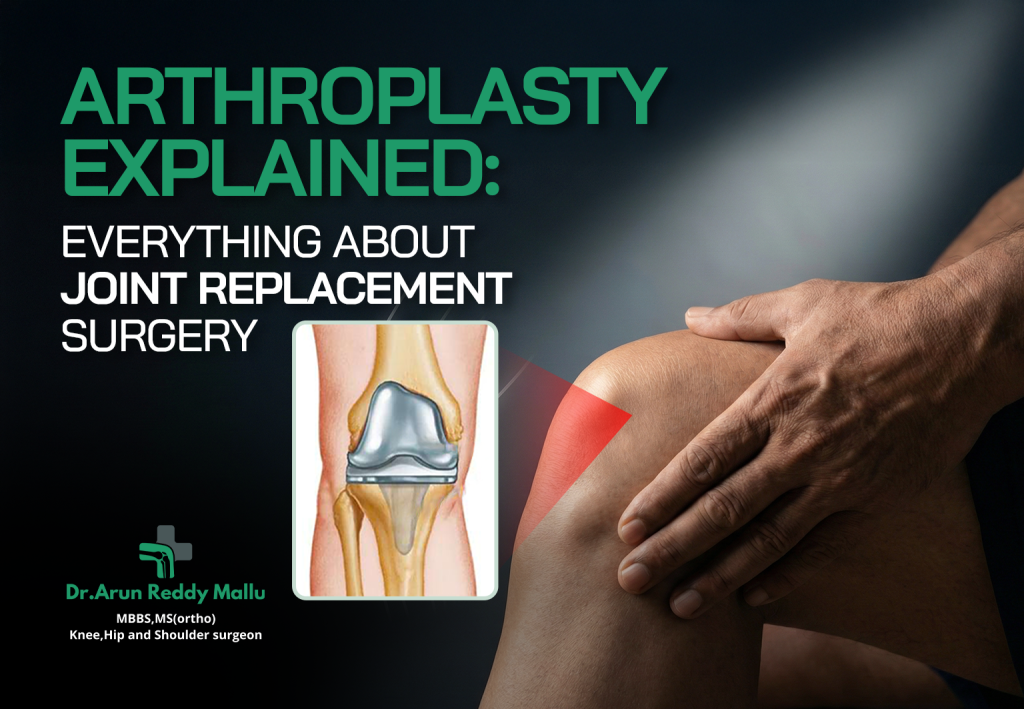
Arthroplasty Explained: Everything About Joint Replacement Surgery
Joint pain in the knees, hips, shoulders, or elbows is a common issue affecting millions of people worldwide. Chronic joint pain caused by osteoarthritis, rheumatoid arthritis, injuries, or age-related wear and tear can significantly limit mobility and impact quality of life. When medications, physiotherapy, and lifestyle changes are no longer effective, arthroplasty — commonly known as joint replacement surgery — becomes one of the most reliable and successful treatment options.
Thanks to advancements in surgical techniques, prosthetic implant materials, robotic-assisted surgery, and enhanced recovery protocols, arthroplasty today offers better outcomes, faster recovery, and improved long-term function.
For patients looking for expert guidance, experienced orthopedic surgeon Dr. Arun Reddy Mallu At Continental Hospital provide advanced and precise care in performing joint replacement procedures.
What Is Arthroplasty?
Arthroplasty refers to the surgical reconstruction or replacement of a joint to restore normal movement and function. While the term can include procedures to reshape or realign joints, it most commonly refers to joint replacement surgery, where damaged parts are replaced with artificial implants known as prostheses.
Arthroplasty can be performed on various joints, including:
- Knee
- Hip
- Shoulder
- Elbow
- Ankle
- Wrist
- Finger joints
Among these, knee and hip replacements are the most widely performed and have the highest success rates.
Why Is Arthroplasty Needed?
A joint replacement may be recommended when a person experiences:
- Severe joint pain that interferes with daily activities
Pain that persists even during rest or affects simple movements like walking, climbing stairs, or reaching overhead is a major indication.
- Advanced joint damage visible on imaging
X-rays or MRIs may show narrowing of joint space, bone spurs, deformity, or cartilage degeneration.
- Ineffective non-surgical treatments
If medications, physiotherapy, steroid injections, or lifestyle modifications fail to provide relief, arthroplasty becomes a viable solution.
- Loss of mobility or joint instability
Joint instability, stiffness, or restricted motion can significantly compromise daily function.
- Deformity of the joint
Conditions like bowlegs, knock knees, or hip deformities may also call for joint replacement.
Common Types of Arthroplasty
- Total Joint Replacement (TJR)
This is the most common type of arthroplasty where both sides of a damaged joint are replaced with prosthetic components.
Examples: Total Knee Replacement (TKR), Total Hip Replacement (THR).
- Partial Joint Replacement
Only the damaged portion of the joint is replaced, preserving healthy bone and tissue.
Example: Unicompartmental Knee Replacement.
- Revision Arthroplasty
Performed when a previous joint replacement fails due to wear, infection, or mechanical issues. Revision surgery is more complex than primary replacement.
- Resurfacing Arthroplasty
Involves reshaping or capping the joint surfaces rather than replacing the entire joint.
Example: Hip resurfacing for younger patients with strong bone density.
Benefits of Arthroplasty
Arthroplasty offers numerous long-term benefits, making it one of the most successful surgeries in modern medicine.
- Pain Relief
The primary and most immediate benefit is significant reduction in joint pain. Many patients report dramatic improvement within days to weeks after surgery.
- Improved Mobility
Restored joint function allows patients to walk more comfortably, climb stairs, and resume daily activities.
- Enhanced Quality of Life
Patients often experience improved sleep, increased independence, and better emotional well-being.
- Long-Lasting Results
Modern implants are durable and can last 15–20 years or more depending on activity levels and implant type.
- Correction of Deformity
Arthroplasty can effectively realign joints and correct deformities caused by arthritis.
How to Prepare for Arthroplasty
Preoperative preparation plays a crucial role in ensuring a smooth surgery and successful recovery.
- Medical Evaluation
A surgeon will review your medical history, perform physical examinations, and order tests like blood work, ECG, and imaging studies.
- Pre-Surgery Physiotherapy
Strengthening muscles around the affected joint improves postoperative outcomes.
- Lifestyle Adjustments
- Weight reduction (if needed)
- Quitting smoking
- Managing diabetes or hypertension
- Home Preparation
Arrange support, install safety bars, and create a comfortable environment for recovery.
The Arthroplasty Procedure: What Happens During Surgery?
Although details vary based on the type of surgery, most joint replacement procedures follow these steps:
- Anesthesia– General or spinal anesthesia is administered.
- Incision & Exposure– The surgeon makes an incision to access the damaged joint.
- Removal of Damaged Tissue– Worn-out cartilage and bone are removed.
- Implant Placement– Prosthetic parts made of metal, ceramic, or high-grade plastic are fitted.
- Closure– The surgical site is closed with sutures or staples.
- Recovery & Monitoring– The patient is moved to the recovery room for observation.
With modern surgical techniques like minimally invasive surgery, computer navigation, and robotic assistance, precision has increased and recovery times have shortened significantly.
Recovery After Arthroplasty
Recovery varies depending on the type of joint replaced and the patient’s overall health. However, most patients follow a similar recovery pattern:
- Hospital Stay
Typically 2–4 days, though some minimally invasive procedures allow same-day discharge.
- Pain Management
Medications and ice therapy help control postoperative discomfort.
- Physiotherapy
Physical therapy starts within 24 hours post-surgery and continues for several weeks. Proper rehabilitation is vital for regaining strength, balance, and mobility.
- Return to Daily Activities
- Walking with support: 1–3 days
- Climbing stairs: 1–2 weeks
- Driving: 4–6 weeks (for knee and hip replacements)
- Full recovery: 3–6 months depending on the joint
- Long-Term Care
Patients are advised to avoid high-impact activities but can comfortably resume low-impact exercises like walking, cycling, and swimming.
Risks and Complications of Arthroplasty
While arthroplasty is safe and widely performed, like any surgical procedure, it comes with certain risks:
- Infection
- Blood clots
- Implant loosening or wear
- Stiffness
- Nerve or blood vessel injury
- Allergic reaction to implant materials
Choosing an experienced orthopedic surgeon greatly reduces the risk of complications.
Why Choose a Specialist for Arthroplasty?
Joint replacement is a highly specialized procedure requiring precision, expertise, and advanced technology. A skilled orthopedic surgeon ensures:
- Accurate diagnosis
- Personalized treatment planning
- Minimally invasive surgical options
- Faster and safer recovery
- Long-lasting results
Technological advancements such as robotic-assisted surgery, computer navigation, and high-performance implants have further improved success rates and patient satisfaction.
Conclusion:
Arthroplasty has transformed the lives of millions by reducing pain, improving mobility, and restoring independence. Whether you are suffering from severe arthritis, joint deformity, or chronic joint pain, modern joint replacement surgery offers a reliable and long-term solution.
If you are considering arthroplasty and want expert guidance from a highly experienced orthopedic surgeon, Dr. Arun Reddy Mallu at Continental Hospital is widely recognized for his expertise in advanced joint replacement procedures, personalized patient care, and outstanding surgical outcomes.
Arthroplasty Explained: Get expert joint replacement care from Dr. Arun Reddy Mallu at Continental Hospital — call +91 99591 35963.