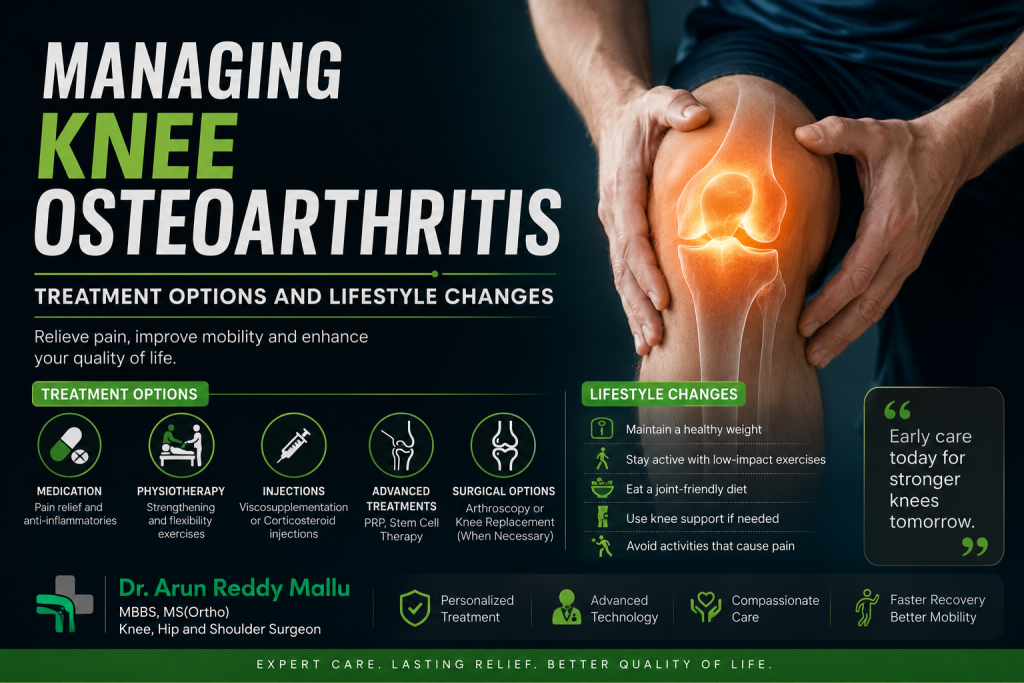
Managing Knee Osteoarthritis – Managing Knee Osteoarthritis is essential for maintaining mobility, reducing pain, and improving overall quality of life. Knee osteoarthritis is one of the most common joint conditions affecting adults, especially those over the age of 40. It occurs when the protective cartilage in the knee joint gradually wears down, leading to pain, stiffness, swelling, and difficulty in movement.
As one of the leading causes of disability worldwide, knee osteoarthritis can significantly impact daily activities such as walking, climbing stairs, exercising, and even standing for long periods. Fortunately, with the right treatment approach and lifestyle modifications, patients can effectively manage symptoms and continue living active lives.
Under the expert care of Dr. Arun Reddy Mallu, a renowned orthopedic surgeon specializing in joint replacements, arthroscopy, sports injuries, and robotic knee replacement, patients receive personalized treatment plans designed to improve joint function and restore mobility.
Understanding Managing Knee Osteoarthritis
Managing Knee Osteoarthritis begins with understanding the condition itself. The knee joint consists of bones, cartilage, ligaments, and surrounding muscles that work together to provide smooth movement. Cartilage acts as a cushion between bones, preventing friction during movement.
When osteoarthritis develops, this cartilage gradually deteriorates. As a result, bones begin rubbing against each other, causing inflammation, pain, stiffness, and reduced flexibility.
The severity of osteoarthritis can vary from mild discomfort to severe joint damage requiring surgical intervention.
Common Symptoms of Knee Osteoarthritis
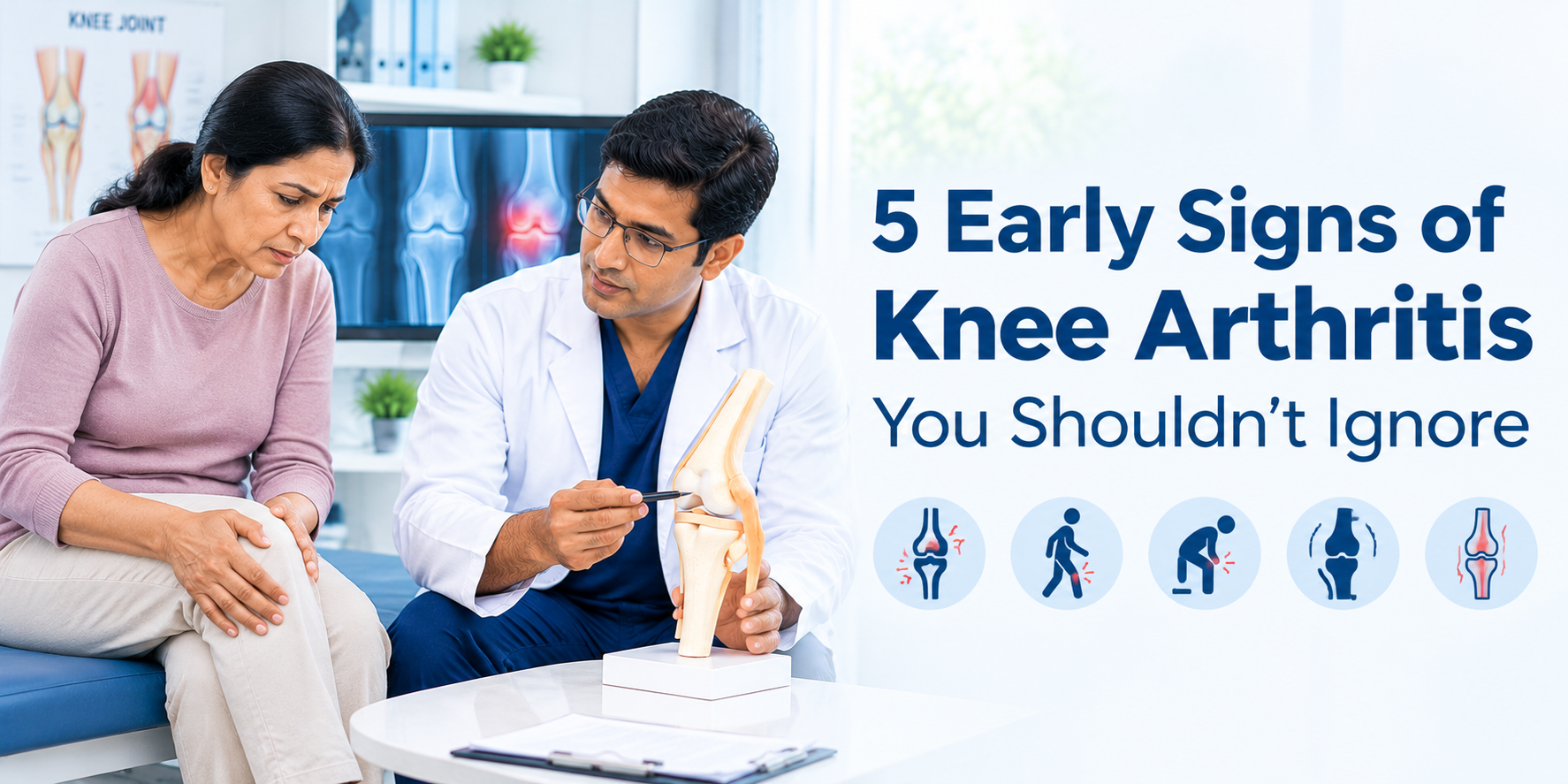
Recognizing symptoms early is a crucial part of Managing Knee Osteoarthritis effectively.
Common symptoms include:
- Persistent knee pain
- Morning stiffness
- Swelling around the knee
- Reduced flexibility
- Difficulty climbing stairs
- Pain while walking
- Grinding or clicking sensations
- Knee instability
- Reduced range of motion
- Difficulty standing for long periods
Symptoms often worsen gradually over time, making early diagnosis important for preventing further joint deterioration.
Causes and Risk Factors
Several factors contribute to the development of knee osteoarthritis.
Age
The risk increases significantly with age due to natural wear and tear of joint cartilage.
Obesity
Excess body weight places additional stress on the knee joints, accelerating cartilage breakdown.
Previous Injuries
Sports injuries, ligament tears, meniscus injuries, and fractures can increase the likelihood of developing osteoarthritis later in life.
Genetics
A family history of osteoarthritis may increase susceptibility.
Repetitive Joint Stress
Occupations or activities involving frequent kneeling, squatting, or heavy lifting can contribute to joint degeneration.
Understanding these factors helps create a more effective plan for Managing Knee Osteoarthritis.
Why Early Managing Knee Osteoarthritis Matters
Many patients ignore mild knee pain until symptoms become severe. However, delaying treatment can result in:
- Progressive cartilage damage
- Increased pain levels
- Reduced mobility
- Muscle weakness
- Poor quality of life
- Greater likelihood of requiring surgery
Early intervention allows orthopedic specialists to slow disease progression and preserve joint function.
Diagnosis and Evaluation
Successful Managing Knee Osteoarthritis starts with an accurate diagnosis.
An orthopedic evaluation typically includes:
Medical History Review
The doctor assesses symptoms, previous injuries, activity levels, and family history.
Physical Examination
Joint stability, flexibility, swelling, and walking patterns are evaluated.
X-rays
X-rays help determine the extent of cartilage loss and joint degeneration.
MRI Scans
In certain cases, MRI scans provide detailed images of cartilage, ligaments, and surrounding structures.
A comprehensive evaluation helps determine the most suitable treatment strategy.
Managing Knee Osteoarthritis Through Lifestyle Changes
Lifestyle modifications are among the most effective ways of Managing Knee Osteoarthritis.
Weight Management
One of the most important lifestyle changes is maintaining a healthy weight.
Every extra kilogram of body weight increases pressure on the knee joint. Weight reduction can significantly decrease pain and improve mobility.
Benefits include:
- Reduced joint stress
- Improved movement
- Lower inflammation
- Better long-term outcomes
Even a modest weight loss can provide noticeable symptom relief.
Regular Physical Activity
Contrary to popular belief, avoiding movement completely can worsen osteoarthritis symptoms.
Low-impact exercises help:
- Strengthen muscles
- Improve flexibility
- Enhance joint stability
- Reduce stiffness
Recommended activities include:
- Walking
- Swimming
- Cycling
- Water aerobics
- Yoga
Regular movement is a vital component of Managing Knee Osteoarthritis successfully.
Strength Training
Strong muscles help absorb stress placed on the knee joint.
Exercises targeting:
- Quadriceps
- Hamstrings
- Gluteal muscles
- Core muscles
can significantly improve knee support and reduce pain.
Flexibility Exercises
Stretching exercises improve range of motion and reduce stiffness.
Common stretching techniques include:
- Hamstring stretches
- Calf stretches
- Quadriceps stretches
- Hip mobility exercises
Flexibility training should be performed regularly under professional guidance.
Role of Physical Therapy in Managing Knee Osteoarthritis
Physical therapy remains one of the most effective non-surgical treatments.
A customized rehabilitation program focuses on:
- Pain reduction
- Strength improvement
- Better balance
- Improved walking patterns
- Enhanced flexibility
Physical therapists also educate patients on proper movement techniques that reduce stress on the knee joint.
Medications for Managing Knee Osteoarthritis
Medication can help relieve symptoms and improve comfort.
Common treatment options include:
Pain Relievers
These help reduce discomfort and improve daily function.
Anti-Inflammatory Medications
They help control inflammation and swelling.
Topical Treatments
Creams and gels can provide localized pain relief.
Medication plans should always be prescribed and monitored by a qualified orthopedic specialist.
Assistive Devices and Joint Support
Many patients benefit from supportive devices.
These include:
- Knee braces
- Walking sticks
- Orthotic shoe inserts
- Supportive footwear
Such devices reduce stress on the knee and improve stability during movement.
Advanced Non-Surgical Approaches for Managing Knee Osteoarthritis
Modern orthopedic care offers advanced treatment options beyond traditional medications.
These may include:
- Joint preservation strategies
- Image-guided procedures
- Structured rehabilitation programs
- Specialized orthopedic interventions
The choice of treatment depends on the severity of arthritis and the patient’s activity level.
Sports Injuries and Managing Knee Osteoarthritis
Many patients develop osteoarthritis after sports-related injuries.
Common sports injuries linked to arthritis include:
- ACL tears
- Meniscus injuries
- Cartilage damage
- Ligament injuries
As a sports injury specialist, Dr. Arun Reddy Mallu emphasizes early diagnosis and proper treatment to minimize long-term joint damage.
When Surgery Becomes Necessary
Not every patient with osteoarthritis requires surgery.
However, surgery may be considered when:
- Pain becomes severe
- Daily activities are affected
- Mobility is significantly restricted
- Non-surgical treatments fail
At this stage, advanced surgical options can provide long-term relief.
Robotic Knee Replacement for Advanced Arthritis
For patients with severe arthritis, robotic knee replacement has become one of the most effective treatment options.
Robotic-assisted surgery offers:
- Enhanced precision
- Better implant positioning
- Personalized surgical planning
- Improved alignment
- Faster recovery potential
Dr. Arun Reddy Mallu specializes in robotic knee replacement procedures that help patients regain mobility and improve quality of life.
Benefits of Knee Replacement Surgery
Modern knee replacement surgery provides numerous benefits:
- Significant pain relief
- Improved mobility
- Better quality of life
- Enhanced independence
- Increased physical activity
Many patients return to walking comfortably and participating in daily activities after recovery.
Recovery After Knee Replacement
Recovery plays a crucial role in long-term success.
Post-surgical rehabilitation typically includes:
- Physical therapy
- Strength training
- Mobility exercises
- Walking programs
- Regular follow-up visits
Following rehabilitation protocols helps patients achieve the best possible outcomes.
Preventing Further Joint Damage
While osteoarthritis cannot always be completely prevented, certain habits help protect joint health.
Maintain a Healthy Weight
Reducing body weight decreases pressure on knee joints.
Stay Active
Regular exercise supports joint function and flexibility.
Strengthen Supporting Muscles
Strong muscles help stabilize joints.
Address Injuries Promptly
Timely treatment of sports injuries can reduce future complications.
Follow Medical Advice
Consistent treatment improves long-term results.
Why Choose Dr. Arun Reddy Mallu for Managing Knee Osteoarthritis?
Dr. Arun Reddy Mallu is a highly experienced orthopedic surgeon specializing in:
- Robotic Knee Replacement
- Joint Replacement Surgery
- Sports Injury Management
- Arthroscopy
- Shoulder Surgery
- Hip Replacement Surgery
- Trauma Care
His patient-centered approach focuses on accurate diagnosis, personalized treatment plans, advanced surgical techniques, and comprehensive rehabilitation.
Patients benefit from evidence-based orthopedic care designed to restore mobility and improve quality of life.
Dr. Arun Reddy Mallu Contact Information
Call:- 9959135963
Whatsapp:- 9959135963
Facebook:- DrArunReddyMallu
Instagram:- drarunreddymallu
Youtube:- https://www.youtube.com/channel/UCt_XTYwyqpzloXtkTLblwxw
LinkedIn:- drarunmallu
Conclusion
Managing Knee Osteoarthritis requires a combination of early diagnosis, lifestyle changes, physical therapy, medical management, and advanced orthopedic care when necessary. By adopting healthy habits, maintaining an active lifestyle, and seeking expert orthopedic guidance, patients can effectively reduce symptoms and preserve joint function.
For individuals experiencing persistent knee pain, stiffness, or mobility issues, consulting an experienced orthopedic specialist is the first step toward long-term relief. With modern treatment options, including robotic knee replacement and advanced rehabilitation programs, patients can continue living active and fulfilling lives while successfully Managing Knee Osteoarthritis.