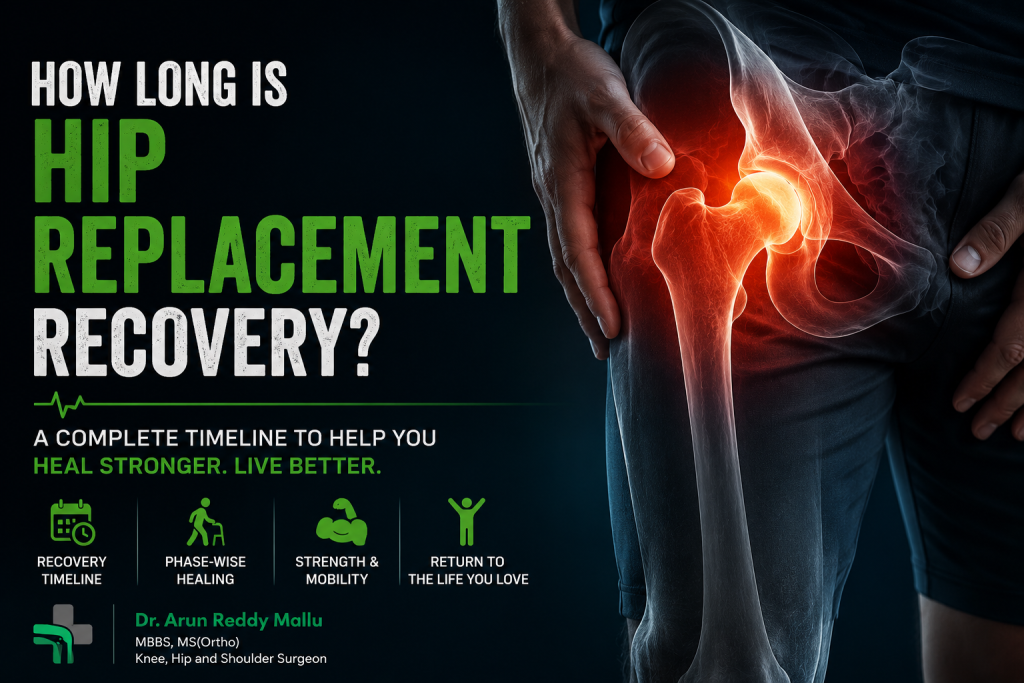
Hip Replacement Recovery – Hip replacement surgery has helped countless people regain mobility, reduce chronic pain, and return to an active lifestyle. Patients suffering from severe hip arthritis, joint damage, fractures, or mobility problems often experience significant improvement after surgery. However, one of the most common questions patients ask is about Hip Replacement Recovery and how long it takes to return to normal activities.
Recovery after hip replacement varies from person to person depending on age, overall health, physical condition, and the type of surgery performed. According to Dr. Arun Reddy Mallu, proper rehabilitation, physiotherapy, and advanced surgical techniques play a major role in improving recovery outcomes after hip replacement surgery.
What Is Hip Replacement Surgery?
Hip replacement surgery is a procedure where the damaged parts of the hip joint are replaced with artificial implants. The surgery is commonly recommended for patients suffering from:
- Severe osteoarthritis
- Hip joint damage
- Chronic hip pain
- Hip fractures
- Avascular necrosis
- Reduced mobility due to hip degeneration
The goal of surgery is to relieve pain, improve movement, and help patients regain independence in daily activities.
Dr. Arun Reddy Mallu specializes in robotic and navigated hip replacement surgeries, including advanced techniques such as Direct Anterior Approach for Total Hip Replacement.
Understanding Hip Replacement Recovery Timeline
The timeline for Hip Replacement Recovery differs for every patient, but most people gradually recover over several weeks to months.
First Few Days After Surgery
Recovery begins immediately after surgery. Most patients are encouraged to start moving within a day after the procedure under medical supervision.
During this stage:
- Walking assistance devices may be used
- Physiotherapy begins early
- Pain management is provided
- Gentle movement exercises are introduced
Early movement helps improve circulation, reduce stiffness, and support faster recovery.
First Two Weeks of Hip Replacement Recovery
The first two weeks are extremely important for healing. Patients gradually improve their ability to walk, sit, and perform basic activities.
During this period:
- Swelling and mild discomfort are common
- Walking improves slowly
- Surgical wounds begin healing
- Physiotherapy continues regularly
Many patients can walk short distances with support during this stage.
Proper rehabilitation and following orthopedic advice carefully can improve recovery outcomes significantly.
Recovery Between 4 to 6 Weeks
Most patients notice considerable improvement during this phase of Hip Replacement Recovery.
By this time:
- Walking becomes easier
- Pain reduces significantly
- Mobility improves
- Daily activities become more manageable
Some patients may slowly return to desk jobs or light activities depending on their recovery progress.
However, strenuous activities and heavy lifting should still be avoided unless advised by the orthopedic surgeon.
Recovery After 3 Months
Around three months after surgery, many patients experience major improvements in movement and quality of life.
At this stage:
- Hip strength improves
- Walking becomes smoother
- Stiffness reduces
- Most routine activities can be performed comfortably
Patients who follow physiotherapy consistently often recover faster and regain confidence in movement earlier.
Full Hip Replacement Recovery
Complete Hip Replacement Recovery may take several months depending on the patient’s condition and the complexity of surgery.
Some individuals recover faster, while others may require longer rehabilitation, especially older adults or patients with severe joint damage.
Long-term recovery focuses on:
- Strengthening muscles around the hip
- Improving flexibility
- Restoring balance and coordination
- Preventing future joint stress
Advanced surgical techniques and robotic-assisted procedures can help improve implant positioning and support better recovery outcomes.
Factors That Affect Hip Replacement Recovery
Several factors influence how quickly a patient recovers after hip replacement surgery.
Age and Overall Health
Younger and healthier patients often recover faster because their muscles and bones heal more efficiently.
Physical Fitness Before Surgery
Patients who maintain better strength and flexibility before surgery may experience smoother rehabilitation.
Type of Surgery
Minimally invasive and robotic-assisted hip replacement surgeries may support quicker recovery and improved precision.
Physiotherapy and Rehabilitation
Regular physiotherapy is one of the most important parts of successful Hip Replacement Recovery.
Following Medical Advice
Patients who follow post-surgical instructions carefully usually achieve better long-term outcomes.
Importance of Physiotherapy After Hip Replacement
Physiotherapy plays a major role in restoring movement after surgery.
Rehabilitation programs focus on:
- Improving hip flexibility
- Strengthening muscles
- Improving walking ability
- Preventing stiffness
- Enhancing balance and stability
Skipping physiotherapy can delay recovery and affect long-term mobility.
When Can Patients Return to Normal Activities?
Most patients can gradually return to normal activities within several weeks after surgery.
Typical recovery milestones may include:
- Walking with support within days
- Driving after a few weeks if approved by the doctor
- Returning to office work within 4 to 6 weeks
- Resuming moderate activities after a few months
High-impact sports and excessive physical stress should be avoided unless specifically cleared by the orthopedic surgeon.
Warning Signs During Hip Replacement Recovery
Patients should consult their orthopedic specialist immediately if they experience:
- Severe swelling
- Persistent pain
- Fever or redness around the incision
- Difficulty walking suddenly
- Signs of infection
- Hip instability
Early medical attention can help prevent complications.
Why Choosing the Right Orthopedic Surgeon Matters
Successful Hip Replacement Recovery depends greatly on surgical expertise, advanced techniques, and proper rehabilitation planning.
Dr. Arun Reddy Mallu is widely recognized for expertise in robotic joint replacement, arthroscopy, sports injury management, complex hip and knee surgeries, and trauma care. His patient-focused approach and precision-based orthopedic treatment have helped many patients regain mobility and improve their quality of life.
Known for advanced orthopedic care and modern surgical techniques, Dr. Arun Reddy Mallu is considered one of the best orthopedic surgeons in Hyderabad for hip replacement surgery, robotic joint replacement, sports injuries, arthroscopy, and revision joint replacement procedures.
Dr. Arun Reddy Mallu Contact Information
Call:- 9959135963
Whatsapp:- 9959135963
Facebook:- DrArunReddyMallu
Instagram:- drarunreddymallu
Youtube:- https://www.youtube.com/channel/UCt_XTYwyqpzloXtkTLblwxw
LinkedIn:- drarunmallu
Conclusion
Understanding the timeline of Hip Replacement Recovery helps patients prepare mentally and physically for the healing process. Recovery is gradual, but with proper rehabilitation, physiotherapy, and expert orthopedic care, most patients can return to comfortable and active lifestyles.
If you are experiencing chronic hip pain, difficulty walking, or severe joint damage, consulting an experienced orthopedic specialist like Dr. Arun Reddy Mallu can help you receive advanced treatment and personalized recovery guidance for long-term joint health.