Key Benefits of Revision Hip Replacement You Should Know
Hip replacement surgery has helped millions of people regain mobility and live without chronic hip pain. However, a hip implant is not designed to last forever. Over time, some patients may experience pain, instability, infection, or implant failure after their initial hip replacement. When this happens, revision hip replacement surgery becomes necessary.
Revision hip replacement is a specialized procedure aimed at correcting problems from a previous hip replacement and restoring comfort, stability, and movement. Though more complex than the first surgery, it offers significant benefits when performed by an experienced orthopaedic surgeon such as Dr. Arun Reddy Mallu at Continental Hospital.
What Is Revision Hip Replacement?
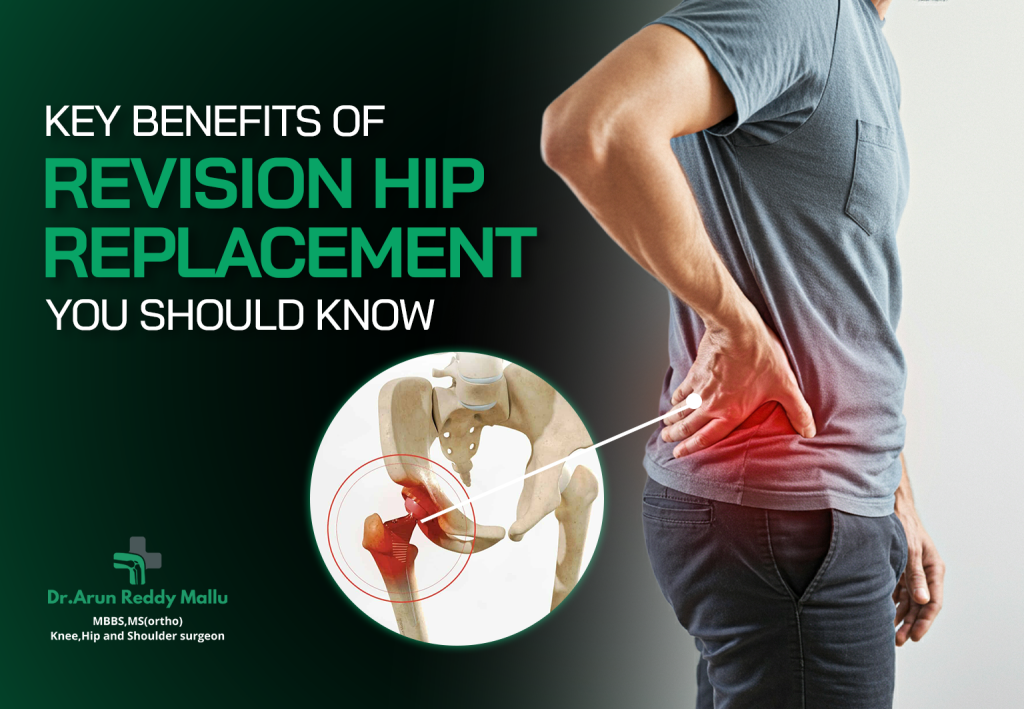
Revision hip replacement is a surgical procedure in which part or all of an existing hip implant is removed and replaced with a new one. Unlike primary hip replacement, revision surgery deals with already altered bone, scar tissue, and sometimes weakened muscles or ligaments.
This procedure is recommended when the original hip replacement no longer functions properly due to wear, loosening, infection, repeated dislocations, fractures around the implant, or persistent pain that affects daily life.
What Happens During Revision Hip Replacement Surgery?
Understanding what happens during revision hip replacement helps patients feel more confident and prepared.
Pre-surgery evaluation
Before surgery, the surgeon performs a detailed assessment using imaging tests and medical history to identify the exact problem. The surgical plan is customized based on bone quality, implant condition, and overall health.
Removal of old implant
During surgery, the surgeon carefully removes the worn-out or damaged hip components. This step requires precision, especially when the implant is firmly attached to bone or surrounded by scar tissue.
Treatment of underlying problems
If infection is present, affected tissue is thoroughly cleaned. If bone loss is found, bone grafts or special implants may be used to rebuild strength and support.
Placement of new implant
Advanced revision implants are placed to restore stability, correct leg length, and improve joint movement. These implants are specifically designed for revision cases and offer better fixation in weakened bone.
Closure and recovery
After ensuring the joint is stable, the incision is closed, and the patient is shifted to recovery. Physiotherapy usually begins early to support healing and mobility.
Key Benefits of Revision Hip Replacement
- Effective pain relief
One of the most important benefits of revision hip replacement is significant pain reduction. Pain caused by loose implants, wear debris, or infection is addressed at the source, allowing patients to experience long-term relief.
- Improved mobility and walking ability
A failing hip replacement can severely limit movement. Revision surgery restores joint alignment and stability, making it easier to walk, sit, stand, and climb stairs with confidence.
- Better joint stability
Patients who experience repeated hip dislocations benefit greatly from revision surgery. The procedure corrects implant positioning and improves muscle balance, reducing the risk of future dislocations.
- Correction of implant failure
Over time, implants can wear down or loosen. Revision surgery replaces these components with modern, durable implants designed to last longer and perform better.
- Control of infection
When infection affects a hip replacement, revision surgery plays a crucial role in removing infected tissue and restoring joint health. Treating infection early prevents further damage to bone and surrounding structures.
- Restoration of bone strength
Bone loss is common in failed hip replacements. Revision surgery uses advanced techniques to rebuild bone, improving joint support and long-term outcomes.
- Improved quality of life
With reduced pain and improved movement, patients often regain independence. Simple activities such as walking outdoors, performing daily chores, and enjoying social life become possible again.
- Long-term joint function
Although revision surgery is complex, modern surgical techniques and implants allow patients to enjoy stable and functional hip joints for many years when combined with proper care and rehabilitation.
Who Needs Revision Hip Replacement?
Revision hip replacement may be recommended if you experience:
- Persistent or increasing hip pain
- Difficulty walking or bearing weight
- Recurrent hip dislocations
- Swelling, warmth, or signs of infection
- Implant loosening or mechanical failure
- Fractures around the hip implant
Early evaluation helps prevent complications and improves surgical outcomes.
Recovery After Revision Hip Replacement
Recovery after revision hip replacement may take longer than primary hip replacement, but proper rehabilitation plays a key role in success.
- Hospital stay:Slightly longer than primary surgery
- Physiotherapy:Begins early to restore strength and mobility
- Walking support:Temporary use of walker or crutches
- Pain management:Controlled with medications and therapy
- Lifestyle changes:Following activity guidelines improves implant longevity
Patients who follow rehabilitation instructions closely often achieve excellent functional recovery.
Why Surgeon Experience Matters
Revision hip replacement requires advanced surgical skill, careful planning, and access to specialized implants. Choosing an experienced orthopaedic surgeon is critical for achieving the best outcome.
Patients seeking expert care often consult Dr. Arun Reddy Mallu at Continental Hospital, who has experience managing complex hip replacement and revision cases with a patient-focused approach.
Conclusion
Revision hip replacement is a powerful solution for patients facing complications after a previous hip replacement. While it is a more complex procedure, the benefits are significant — including pain relief, improved mobility, better joint stability, infection control, and enhanced quality of life.
Book your revision hip replacement with Dr. Arun Reddy Mallu at Continental Hospital — call +91 99591 35963 today for expert care and lasting relief.